
- Home
- Customized Screw Barrel
Customized Screw Barrel
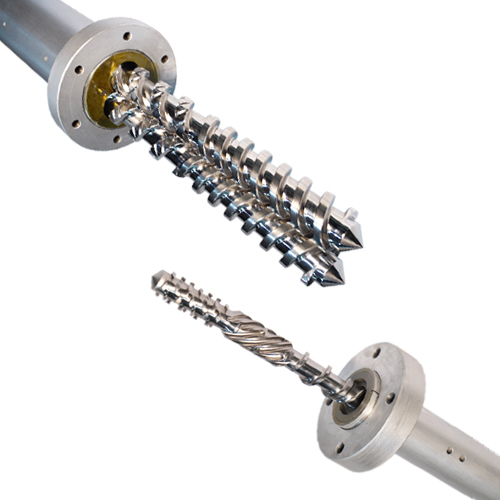
A customized screw barrel is a purpose-built extrusion component engineered to exact customer specifications rather than manufactured to a fixed standard design. While standard screw barrels serve the requirements of common polymer processing applications effectively, a significant number of industrial extrusion operations involve specialised polymers, demanding throughput targets, unusual machine configurations, or specific processing conditions that cannot be adequately met by an off-the-shelf product. In these situations, a purpose-built solution is not merely a preference but an operational necessity.
Customized Screw Barrel
Price of Customized Screw Barrel
|
Screw Minimum Size (mm or inch) |
Screw Maximum Size (mm or inch) |
Barrel Minimum Size (mm or inch) |
Barrel Maximum Size (mm or inch) |
Minimum Price (In Rs) |
Maximum Price (In Rs) |
|---|---|---|---|---|---|
|
20mm |
250mm |
20mm |
250mm |
Rs. 35,000 |
Rs. 40,00,000 |
Technical Specifications of Customized Screw Barrel
| Specification | Technical Details |
|---|---|
|
Screw Diameter |
20 mm to 250 mm (Standard range) |
|
Screw Length/Diameter L/D Ratio |
22:1 up to 40:1 |
|
Barrel Diameter |
20 mm to 250 mm (Standard range) |
|
Barrel Length/Diameter L/D Ratio |
22:1 up to 40:1 |
|
Base Material |
MUSCO Grade EN41B (38CrMoAlA) Nitrided Steel |
|
Surface Treatment |
Gas Nitriding, Hard Chrome Plating |
|
Surface Hardness |
65–68 HRC (500–550°C) |
|
Nitriding Depth |
0.5 mm to 0.6 mm |
|
Screw Type |
Barrier, Meddock Mixing, Single Flight, Single Flight With Mixing |
|
Wear Protection |
Bimetallic Coating & Tungsten Carbide Coating On Screw & Barrel HSS Sleeve Fitted |
|
Production Length |
Up to 6000 mm (Both Single Piece & Two Piece Construction) |
|
Suitable Materials |
PP, HD, LLDP, LLDPE, PVC, HDPE |
|
Suitable Industries |
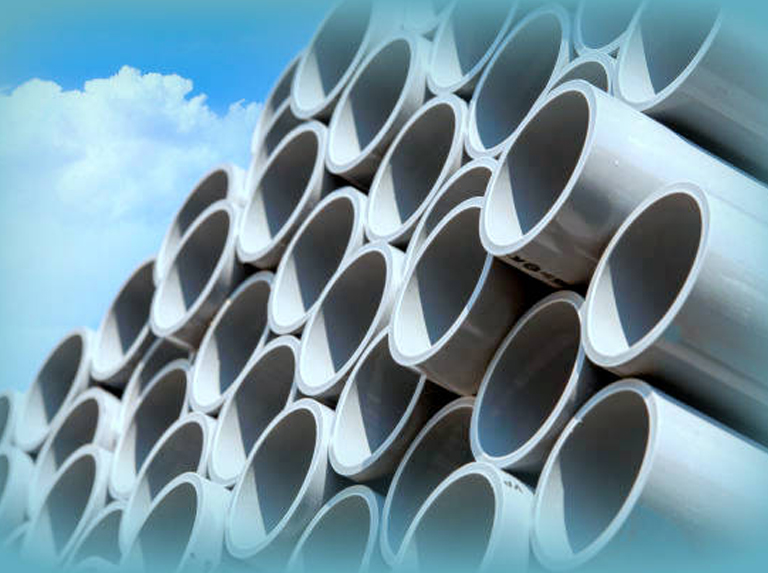
HDPE / PVC Pipe Manufacturing, Packaging Industry, Household Industries, Furniture Industries, Rubber Industries, Food Industries, Reprocess Industries Etc. |
|
Suitable Machineries |
HDPE / PVC Pipe Extrusion, PVC Film Extrusion, Rubber Extrusion, Food Extrusion, Injection Moulding, Blow Moulding, Reprocess Extrusion, Blown Film Extrusion, Sheet Extrusion, Reprocess Extrusion Etc. |
|
Condition |
New |
|
Stock |
In stock Or As Per Order |
|
Weight |
150 kgs to 1000 kgs |
|
Product Identity |
HTW – SS, HTW – SB, HTW – SSB |
The customization of a screw and barrel assembly can encompass every dimension of its design and manufacture. Screw geometry parameters including outer diameter, L/D ratio, compression ratio, flight depth, helix angle, pitch, and mixing section design are all variables that can be engineered to specific values. Barrel parameters including bore diameter, bore geometry, number and position of temperature zones, cooling channel configuration, flange geometry, and material grade are similarly open to precise specification. Surface treatment selection, material grade, and optional wear enhancement features such as tungsten carbide hardfacing on flight tips or corrosion-resistant bore alloys are additional layers of customization that further tailor the component to the processing environment in which it will operate.
At Hi-Tech Screw Barrel Works, customized screw barrel manufacturing is a core business competency built over three decades of application-specific engineering experience. Our engineering team works directly with customers to understand the precise requirements of each application and translates those requirements into manufactured components that perform exactly as intended from the first production run. Whether the need is a replacement for an obsolete OEM component, a performance upgrade over an existing standard design, or a bespoke assembly for a novel application, Hi-Tech Screw Barrel Works has the engineering capability, manufacturing infrastructure, and quality systems to deliver.
Hi-Tech Screw Barrel Works is a trusted manufacturer, exporter, and supplier of customized screw barrels from Ahmedabad, Gujarat, India — serving plastic processors, machinery builders, research institutions, and specialty extrusion operators across India and internationally with precision-engineered custom components backed by ISO 9001:2015 certified manufacturing.
Technical Specifications — Customization Parameters
| Parameter / Feature | Customization Range or Options |
|---|---|
|
Screw Diameter |
20 mm to 300 mm — or as per customer drawing |
|
Barrel Bore Diameter |
20 mm to 300 mm — or as per customer drawing |
|
L/D Ratio |
10:1 to 40:1 — any ratio engineered to application |
|
Compression Ratio |
1.5:1 to 5.0:1 — calculated to polymer and process |
|
Screw Type |
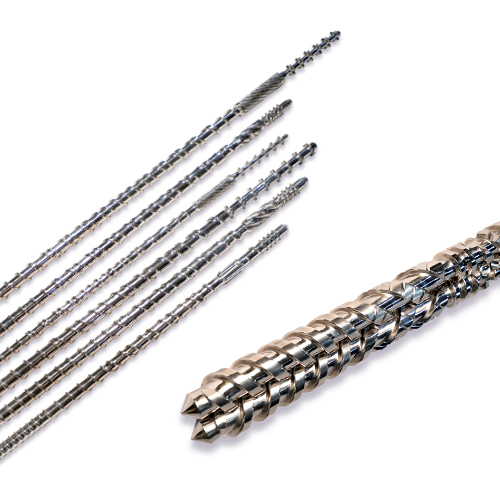
Single screw, twin screw (conical or parallel), vented, non-vented |
|
Screw Base Material |
38CrMoAlA, 42CrMo, Stainless Steel, or as specified |
|
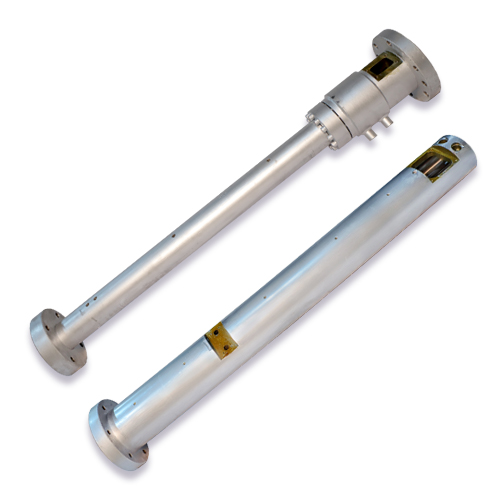
Barrel Construction |
Single-material nitrided or bimetallic centrifugally cast |
|
Bore Liner Alloy |
Iron-based, nickel-based, stainless steel — as per application |
|
Surface Treatment |
Gas nitriding, ion nitriding, WC HVOF hardfacing, chrome plating |
|
Surface Hardness |
HRC 58–68 depending on treatment selected |
|
Nitriding Depth |
0.3 mm to 0.8 mm as specified |
|
Mixing Sections |
Maddock, barrier, blister ring, pin mixing elements — as required |
|
Venting Configuration |
Atmospheric vent or vacuum vent as required |
|
Heating Zones |
2 to 12 zones positioned as per design |
|
Cooling System |
Air cooling or water cooling as per extruder |
|
Thermocouple Type |
Type J or Type K as per extruder specification |
|
Flange Geometry |
Matched to any extruder make, model, or customer drawing |
|
Compatible Materials |
Any thermoplastic, elastomer, rubber, or specialty polymer |
|
Surface Finish |
Ra 0.4 to 1.6 µm as specified |
|
Documentation |
Engineering drawing, material certificates, inspection report |
|
Lead Time |
3 to 10 weeks depending on complexity and specifications |
Types of Customized Screw Barrel
Salient Features
Application-Specific Screw Geometry Design
Every custom manufacturing project begins with a detailed application review. Our engineering team analyses the target polymer, its rheological characteristics, thermal sensitivity, filler loading, and processing window before specifying the screw geometry. Flight depth, compression ratio, helix angle, and the design of mixing sections — such as barrier flights, Maddock mixing elements, or blister rings — are all configured specifically to optimise melting, homogenization, and output rate for the exact material and machine combination in question.
Material Grade Selection for the Application
Base material for both components is selected to match the specific processing environment. For standard thermoplastics, 38CrMoAlA nitriding steel provides an excellent combination of machinability, nitriding response, and toughness. For high-performance applications, bi-metallic alloys is selected. For corrosive processing environments involving halogenated polymers, stainless steel or nickel-alloy based constructions are available. Material selection is matched to the actual processing demands — not to a default specification.
Precision CNC Machined to Customer Drawing or Sample
All custom components are CNC machined to either customer-supplied engineering drawings or to drawings prepared by our engineering team from reverse-engineered samples. Our CNC turning centres, machining centres, and cylindrical grinding machines operate to micron-level tolerances, ensuring that every critical dimension matches the specification exactly. Customers can supply worn or damaged originals, dimensional data sheets, or extruder model references — our team will produce accurate manufacturing drawings before committing to production.
Customized Surface Treatment and Hardening
Surface treatment selection is matched to the wear and corrosion demands of the specific application. Standard gas or ion plasma nitriding achieving HRC 65-68 at 0.4–0.6 mm depth is the default for most thermoplastic processing applications. For highly abrasive applications, tungsten carbide HVOF thermal spray hardfacing on screw flight tips extends wear life by two to three times. For corrosive applications, hard chrome plating or nickel-based alloy cladding provides chemical resistance where standard nitriding is insufficient.
Bimetallic Barrel Options for Extended Bore Life
For applications where barrel bore wear is the primary limiting factor, the barrel can be manufactured with a bimetallic bore liner centrifugally cast from a high-alloy composite achieving HRC 65-68 bore surface hardness. This construction extends barrel bore service life by a factor of three to five times compared to a standard nitrided bore and is particularly valuable in highly abrasive compound processing applications.
Custom Mixing Section and Screw Zone Design
For applications requiring enhanced mixing performance, the assembly can incorporate dedicated mixing sections engineered into the screw design. Barrier flight mixing sections improve melt temperature uniformity. Maddock or pin mixing elements enhance dispersive mixing of pigments, fillers, or immiscible polymer blends. Custom venting sections with atmospheric or vacuum vent ports in the barrel can be incorporated for devolatilization of moisture, residual monomers, or processing solvents.
Reverse Engineering and OEM Replacement Capability
A significant portion of customized screw barrel enquiries originate from processors operating extruder models for which the original equipment manufacturer no longer supplies spare components. Hi-Tech Screw Barrel Works offers a comprehensive reverse engineering service whereby worn or damaged original components are dimensionally analysed using precision CMM measurement and 3D profiling to produce complete manufacturing drawings. Production proceeds only after the customer has reviewed and approved the drawing.
Custom Temperature Zone Configuration
The barrel heating and cooling zone configuration is tailored to match the specific temperature profile requirements of the target material and barrel length. Zone boundaries are positioned to align with the functional zones of the screw design. Heater band seat dimensions, thermocouple port types and positions, and cooling channel routing are all specified to the customer’s requirements, including compatibility with specific temperature controller models and extruder control systems.
Applications




Working Mechanism — How Customization Improves Performance
Feed Zone Optimization
The feed zone geometry is designed to match the bulk density and feed characteristics of the specific material being processed. For free-flowing pellets, a standard flight geometry works well. For powders, regrind, flakes, or low-bulk-density materials, a modified feed zone with increased flight depth ensures consistent material intake and prevents starve-feeding that would cause output rate instability.
Compression Zone Design
The compression ratio and the length of the compression zone are matched to the melting behaviour of the specific polymer. Fast-melting crystalline polymers require a shorter, more abrupt compression zone. Amorphous polymers with a broad softening range require a longer, gradual compression. Materials with significant filler content require specific compression ratios that account for the higher bulk density and different melting characteristics of the filled compound versus the base resin alone.
Mixing Section Engineering
For applications where additive dispersion, colour uniformity, or blend homogeneity are critical, mixing sections are engineered into the custom screw design at the optimal position and with the appropriate mixing geometry. A Maddock mixing element placed at the end of the metering zone provides intensive dispersive mixing for pigment dispersion. A barrier mixing section placed in the transition zone provides distributive mixing that improves melt temperature uniformity and reduces melt temperature variation between the barrel wall and screw root.
Venting Zone Design
For materials that contain moisture, residual polymerization monomers, or processing solvents, a venting zone can be incorporated into the custom assembly design. The screw geometry in the vent zone is designed to create a decompression section where the melt pressure drops to atmospheric, allowing volatile components to escape through a vent port in the barrel. The vent port configuration is customized to the barrel geometry and the volatilization characteristics of the material being processed.
Why Choose Hi-Tech Screw Barrel Works
Three Decades of Application Engineering Knowledge
Hi-Tech Screw Barrel Works has been designing and manufacturing screw barrels for a wide range of polymer processing applications for over three decades. This accumulated knowledge enables our engineering team to move quickly from a customer’s application description to a complete and accurate screw geometry specification. We understand the relationship between screw geometry and processing performance across a wide range of polymers and processing conditions, and we apply this understanding to every customized screw barrel project we undertake.
Complete In-House Manufacturing from Design to Dispatch
From initial engineering drawing preparation through CNC rough turning, precision flight machining, cylindrical grinding, dedicated nitriding, and final inspection — every stage of custom screw barrel production at Hi-Tech Screw Barrel Works is carried out in-house without outsourcing any critical manufacturing step. This complete in-house capability gives us full control over dimensional accuracy, surface quality, heat treatment consistency, and schedule — with a single point of accountability for the customer throughout the project.
Reverse Engineering and OEM Replacement Capability
Many customers approach Hi-Tech Screw Barrel Works with a worn or damaged screw barrel from an obsolete or non-standard extruder model and a requirement to reproduce it exactly. Our reverse engineering capability — using precision CMM measurement, 3D dimensional analysis, and CAD drawing preparation — allows us to take any physical sample, regardless of its condition, and produce a complete, accurate manufacturing drawing from which an exact replacement is produced. This service has enabled many customers to restore production lines that had been standing idle for lack of available spare components.
ISO 9001:2015 Certified Quality Management System
Every customized screw barrel is manufactured and inspected under our ISO 9001:2015 certified quality management system, ensuring that all critical dimensions, surface treatments, and material specifications are verified at every stage of production. The complete documentation package supplied with every custom component gives customers the traceability and quality assurance they need for their own quality records, maintenance systems, and customer audit requirements.
FAQs
What exactly can be customized in a customized screw barrel?
Almost every design parameter of a screw barrel assembly can be customized to specific customer requirements at Hi-Tech Screw Barrel Works. For the screw component, customization options include the overall diameter and L/D ratio, compression ratio and how it is distributed along the screw length, flight depth, helix angle and pitch, the inclusion of specialized mixing sections such as Maddock elements, barrier flights, blister rings, or pin mixers, the specification of venting sections for devolatilization, the base material grade, surface treatment type and depth, optional flight tip wear enhancement treatments such as tungsten carbide HVOF hardfacing, and the drive end geometry including keyway dimensions, spline configuration, and coupling specifications. For the barrel component, customization options include bore diameter and geometry, number and positioning of temperature zones, heating and cooling configuration, flange geometry and bolt circle dimensions, material grade, bore liner alloy selection, thermocouple port type and positioning, vent port design and position, and surface finish specification. The extent of customization applied to any given project is determined entirely by the application requirements and the customer specifications, and there is no minimum level of customization required to access our custom manufacturing service.
How does Hi-Tech Screw Barrel Works approach a new custom screw barrel project?
Every custom screw barrel project at Hi-Tech Screw Barrel Works follows a structured process designed to ensure that the finished component exactly meets the customer requirements. The process begins with a detailed application review in which our engineering team gathers information about the extruder model, the polymer being processed, the target output rate, the processing conditions, and any specific performance objectives or problems with the existing component that the new design needs to address. Based on this information, a preliminary screw geometry and barrel configuration specification is prepared and shared with the customer for review and confirmation. Once the specification is agreed, a complete engineering drawing is prepared and submitted to the customer for approval. Production commences only after the drawing is formally approved. During production, in-process dimensional checks are conducted at each key machining stage to verify conformance. After final machining and surface treatment, a complete dimensional inspection is performed and documented in the inspection certificate supplied with the component. The customer is kept informed of production progress throughout, and any deviations or queries that arise are communicated and resolved before proceeding to the next stage.
Can Hi-Tech Screw Barrel Works manufacture a replacement from a worn or damaged original sample?
Yes. Reverse engineering from worn or damaged original samples is one of the most frequently requested services and our engineering team is experienced in producing accurate replacement drawings from samples in any condition. The reverse engineering process begins with a thorough dimensional measurement of the sample using precision instruments including calibrated CMM equipment, precision micrometers, and bore gauges to capture all critical dimensions. Where wear or damage has altered the original dimensions, our engineering team applies knowledge of standard screw and barrel geometry conventions to reconstruct the original nominal dimensions from the measured worn values. A complete manufacturing drawing is then prepared in CAD format capturing all nominal dimensions and tolerances, and this drawing is submitted to the customer for review and approval before production commences. Customers are encouraged to provide any available original documentation for the extruder model alongside the physical sample as this facilitates more accurate dimensional reconstruction. In cases where no documentation is available and the sample is severely worn, a discussion about the extruder model specifications and any known original dimensions greatly assists the process.
What is the lead time for a customized screw barrel from Hi-Tech Screw Barrel Works?
Lead times for custom screw barrel projects depend on the complexity of the component, the availability of raw material, and the current production schedule. As a general guideline, straightforward customizations of standard-range screw barrel sizes involving non-standard dimensions or material grades but no unusual processing requirements typically have a lead time of 3 to 5 weeks from drawing approval. More complex customizations involving significant screw geometry modification, specialized mixing sections, venting provisions, or unusual material grades typically require 5 to 8 weeks from drawing approval. The most complex projects involving very large screw diameters, novel alloy specifications, or multiple simultaneous customization parameters may require 8 to 12 weeks. We commit to a specific lead time for each project at the time of order confirmation and maintain production scheduling visibility to ensure that committed delivery dates are met. Customers with urgent requirements are encouraged to discuss their timeline at the enquiry stage so that we can advise honestly on feasibility and, where possible, expedite production to meet the required delivery date.
How is the screw geometry for a customized screw barrel specified and optimized?
Screw geometry can be specified in several different ways depending on the level of information available and the nature of the customization. For customers with a full engineering drawing from the original equipment manufacturer or from a previous manufacturer, the geometry is specified directly from the drawing with any modifications clearly identified and agreed before production begins. For customers seeking a performance-optimized replacement for an underperforming existing screw, our engineering team reviews the current processing conditions, output rate, melt quality, and any specific problems and proposes geometry modifications aimed at addressing the identified issues. For entirely new applications where no existing geometry is available, our engineering team performs a screw geometry calculation based on the polymer rheology and thermal properties, the target output rate, and the extruder drive characteristics to arrive at an optimised starting geometry. In all cases, the final geometry is documented in a complete engineering drawing that is approved by the customer before production begins, ensuring full transparency and traceability of the design basis for the custom component.
What materials are available for customized screw barrel construction?
A comprehensive range of base materials and bore liner alloys is available for customized screw barrel construction to accommodate the full range of polymer processing applications and performance requirements encountered in modern industrial extrusion. For screw base materials, the primary option for standard thermoplastic applications is 38CrMoAlA — a chromium-molybdenum-aluminium nitriding steel that provides excellent nitriding response and surface hardness after treatment while maintaining a tough, ductile core. For high-performance applications requiring greater base hardness and abrasion resistance, W6Mo5Cr4V2 high-speed steel is used. For applications involving chemically aggressive polymers or processing aids, stainless steel or nickel-alloy constructions are available. For barrel bore liners, the choice between iron-based, nickel-based, and stainless-steel alloys is driven by the abrasion and corrosion demands of the specific application as discussed in detail during the application review stage. All material grades used in production are sourced from reputable suppliers with full material test certificates and independently verified before entering production to ensure compliance with the specified grade.
Can venting be incorporated into a customized screw barrel?
Yes. Vented assemblies incorporating one or more atmospheric or vacuum vent ports in the barrel and a corresponding decompression and re-compression zone geometry in the screw are available as a customization option. Venting is required in extrusion applications where the polymer contains moisture, residual polymerization by-products, processing solvents, or absorbed atmospheric gases that would cause defects such as surface bubbles, voids, or splay marks in the extrudate if not removed before the melt reaches the die. The vented screw geometry incorporates a metering zone followed by a decompression zone where the screw channel depth increases substantially, causing the melt pressure to drop to near-atmospheric. A vent port machined into the barrel at this position allows the released volatiles to escape. A second compression and metering zone downstream of the vent port re-pressurizes the devolatilized melt for die filling. Both atmospheric venting and vacuum-assisted venting with a vacuum pump connected to the vent port are available. The design of the vent zone geometry — including the decompression ratio and the length of the decompression zone — is critical to effective devolatilization without vent flooding and is engineered specifically for each application.
How does Hi-Tech Screw Barrel Works handle confidentiality for custom projects?
Hi-Tech Screw Barrel Works treats all customer-specific engineering information shared during a custom screw barrel project as strictly confidential. Engineering drawings, specifications, proprietary screw geometry data, application information, and customer identity are not shared with any third party without the explicit written consent of the customer. Non-disclosure agreements are available and routinely signed at the customer’s request before any technical information is exchanged. Our manufacturing operations are conducted entirely within our own facility with no outsourcing of machining, heat treatment, or other critical operations to third parties, ensuring that customer-specific design information does not leave our controlled production environment. This confidentiality commitment applies equally to OEM customers who supply their own designs for manufacture and to customers for whom our engineering team prepares the design as part of the project.
What quality documentation is provided with a customized screw barrel?
Every component from Hi-Tech Screw Barrel Works is dispatched with a comprehensive quality documentation package providing full traceability and verification of all critical specifications. The documentation package includes the approved engineering drawing against which the component was manufactured, the material test certificate for the base material confirming chemical composition and mechanical properties, the surface treatment record confirming the nitriding or other surface treatment parameters applied and the achieved surface hardness and depth results, the dimensional inspection certificate recording all critical dimensions measured on the finished component and their conformance to the drawing tolerances, and the surface roughness measurement record for the bore surface and screw root. For bimetallic barrels, the documentation package additionally includes the ultrasonic test report confirming the bonding integrity of the bore liner. This complete documentation package supports the customer’s incoming inspection, quality records, maintenance planning, and any customer or regulatory audit requirements.
Can Hi-Tech Screw Barrel Works supply customized screw barrels for twin-screw extruders?
Yes. We manufacture custom-built screw and barrel assemblies for both single-screw and twin-screw extruder configurations including parallel co-rotating twin screws, parallel counter-rotating twin screws, conical counter-rotating twin screws, and specialist multi-screw configurations. For twin-screw extruders, the customization service extends to all parameters of both the screw geometry and the barrel including the inter-screw centreline distance, the helix direction and timing relationship between the two screws, the clearance specification between the screws and between each screw and the barrel bore, and the design of any intermeshing mixing sections. For conical twin-screw extruders specifically, the taper angle and the relationship between the feed-end and discharge-end screw diameters are additional customization parameters. Customized twin-screw assemblies are supplied as matched pairs with both screws manufactured simultaneously from the same material heat and inspected together to verify correct inter-meshing clearances before dispatch.
What is the difference between a customized screw barrel and an OEM replacement component?
A customized screw barrel and an OEM replacement component are related but distinct products. An OEM replacement is one that is manufactured to exactly replicate the original equipment manufacturer’s specification for a specific extruder model, matching the original dimensions, materials, and performance characteristics as closely as possible. An OEM replacement may be custom-manufactured in the sense that it is not a stock item, but it is not custom-designed as the design objective is exact replication of the original. A customized screw barrel by contrast involves deliberate modification of one or more design parameters relative to the original or standard specification with the intention of improving performance, addressing specific processing problems, or adapting the component to a new application or material. At Hi-Tech Screw Barrel Works we supply both types. OEM replacement components are produced by reverse engineering the original or working from the original engineering drawing with the goal of exact dimensional replication. Custom-engineered assemblies involve the application of our engineering team’s application knowledge to deliberately improve or adapt the design. Many projects involve elements of both OEM replacement and performance customization.
How should a customized screw barrel be commissioned after installation?
Commissioning of a newly installed custom screw barrel requires careful attention to the warm-up and initial operation procedures to protect the new component and establish the baseline performance data that will be used for ongoing monitoring. Before starting the extruder, verify that all heater bands, thermocouple connections, and cooling circuits are correctly installed and functioning. Bring the barrel up to the target processing temperatures using a gradual step-by-step warm-up protocol, allowing at least 20 to 30 minutes at full temperature before introducing material. For the first production run, operate at a reduced screw speed of approximately 60 to 70 percent of normal operating speed for the first two to three hours to allow the screw and barrel surfaces to establish their running clearance gradually. During this initial run-in period, monitor motor current draw, melt pressure, and melt temperature closely to verify that the new component is performing as designed. After the initial run-in period, record all process parameters at the standard operating conditions as baseline values and conduct a dimensional check to establish baseline wear monitoring data. Our technical team is available to advise on application-specific commissioning procedures for every custom component we supply.
What are the most common reasons customers request customized screw barrels?
The most common reasons customers request custom-engineered screw and barrel components fall into several distinct categories. The first and most common is the unavailability of standard replacement parts for obsolete or non-standard extruder models where the original manufacturer no longer supports the machine. The second most common reason is a desire to improve processing performance beyond what the original or standard design delivers — whether in terms of higher output rate, better melt quality, improved energy efficiency, or reduced specific energy consumption. The third common reason is a change in the material being processed on an existing extruder where the original screw barrel design was optimised for a different polymer and produces suboptimal results with the new material. The fourth common reason is the processing of particularly difficult materials such as highly filled compounds, recycled polymers, or specialty engineering resins that require purpose-built designs with specific wear resistance, corrosion resistance, or mixing performance levels. A fifth and growing reason is the need for customized screw barrels for new machine builds by extruder manufacturers who require bespoke screw and barrel assemblies optimised for the specific performance claims of their new machine model.
Can Hi-Tech Screw Barrel Works redesign a screw to improve performance on an existing extruder?
Yes. Performance improvement redesign is one of the most technically rewarding categories of custom work undertaken at our facility. When a customer is experiencing specific processing problems with their current screw and barrel assembly — whether inadequate output rate, excessive melt temperature variation, poor mixing quality, high specific energy consumption, or premature wear — our engineering team conducts a systematic analysis of the existing screw geometry, the processing conditions, and the target polymer to identify the root cause of the performance limitation. Based on this analysis, a redesigned geometry is proposed that specifically addresses the identified limitation. Common redesign interventions include modifying the compression ratio to better match the polymer’s melting behaviour, repositioning or redesigning mixing sections, increasing the metering zone channel depth to reduce specific energy consumption, or modifying the feed zone geometry to improve intake with difficult-to-feed materials. The redesigned component is documented in a complete engineering drawing and the expected performance improvement is discussed with the customer before production is authorised. In many cases, a performance improvement redesign produces measurable gains in output rate, energy efficiency, or product quality that deliver a compelling return on the investment in the new custom assembly.
What industries outside of standard plastic processing use customized screw barrels?
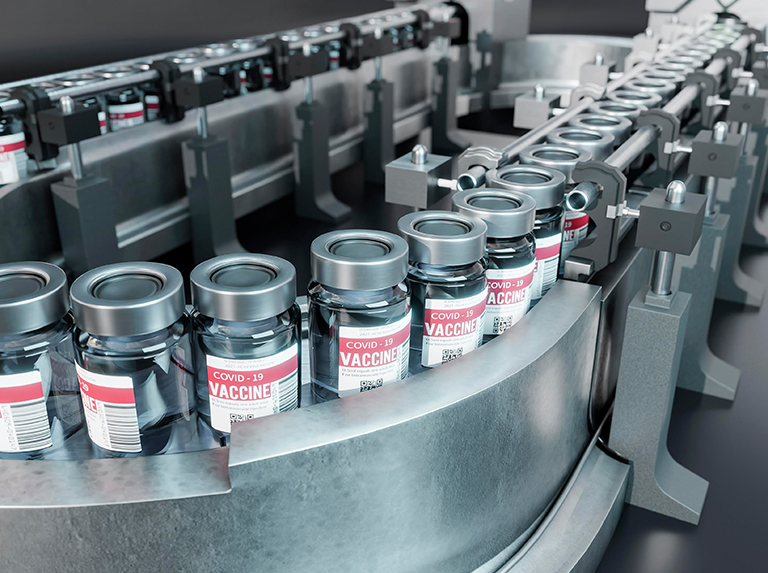
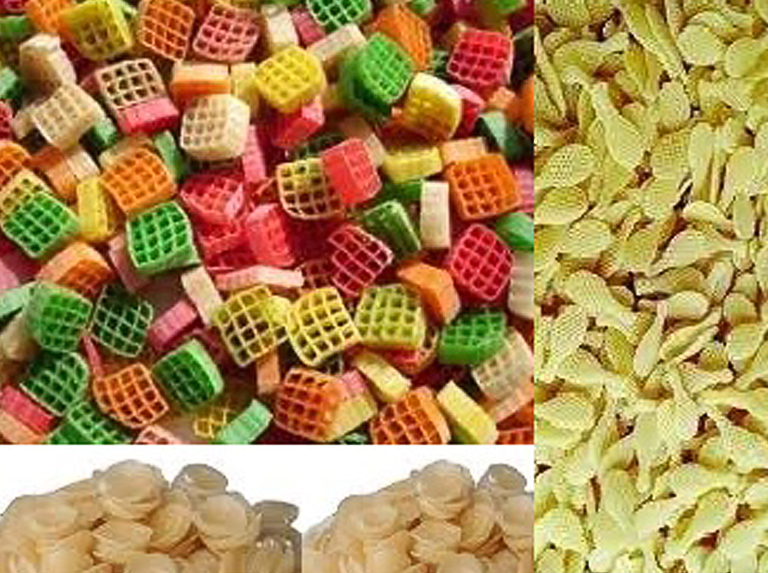
Beyond mainstream thermoplastic extrusion, customized screw barrel components are supplied to a diverse range of specialty processing sectors. The food processing industry uses custom extrusion screw and barrel components in food extrusion applications producing snack foods, breakfast cereals, pasta, and pet food where food-grade material specifications and specific shear characteristics are required. The pharmaceutical industry uses purpose-built assemblies in hot melt extrusion processes for solid dosage forms, drug-polymer matrices, and controlled release formulations where precise thermal management is critical to product quality and regulatory compliance. The ceramics and construction materials industry uses custom-engineered extruder components for the extrusion of clay, brick and tile products, and advanced ceramic bodies where high-torque, abrasion-resistant designs are required. The carbon and graphite industry uses purpose-built screw and barrel units for the extrusion of graphite electrode pastes and carbon composite preforms. Our facility has the engineering flexibility and material specification breadth to design and manufacture components for all of these and other specialty applications.
How does the customization of the L/D ratio affect extruder performance?
The L/D ratio of the screw barrel assembly is one of the most fundamental parameters in extruder design and its customization has wide-ranging effects on processing performance. A longer screw with a higher L/D ratio provides more processing length, which translates into longer residence time in the barrel. This longer residence time allows more complete and uniform melting, more thorough mixing of additives and fillers, more effective devolatilization, and in some cases better melt temperature uniformity at the die. These benefits make higher L/D ratios attractive for difficult-to-process polymers, complex compound formulations, and applications requiring very high melt quality. However, a longer screw also means a more expensive component, higher operating torque requirements on the drive system, and in some cases increased thermal degradation risk for heat-sensitive polymers due to the longer residence time. A shorter screw with a lower L/D ratio processes material more quickly with less residence time and lower torque requirements but may produce less uniform melting and mixing. For standard PVC applications, L/D ratios of 18:1 to 22:1 are the industry norm. For engineering polymer compounding, L/D ratios of 28:1 to 40:1 are common. The optimal L/D ratio for any specific application is determined by the polymer properties, the processing objectives, and the drive system capabilities of the extruder.
What is tungsten carbide hardfacing on a customized screw barrel and when is it specified?
Tungsten carbide hardfacing is an advanced wear enhancement treatment applied to the flight tips of an extruder screw using the HVOF high-velocity oxy-fuel thermal spray process. In this process, tungsten carbide powder particles — typically a WC-Co or WC-CoCr composition — are accelerated to very high velocities in a combustion jet and impacted onto the screw flight tip surfaces, forming a dense, strongly adherent coating with hardness values typically in the range of HV 1200 to 1400. This coating is substantially harder than the HRC 60–65 surface achievable by nitriding and provides dramatically superior resistance to abrasive wear from hard mineral fillers, glass fibres, or other abrasive components in the polymer compound. Tungsten carbide hardfacing is specified for custom-engineered screws in applications involving polymer compounds with high mineral filler loadings such as calcium carbonate above 20 phr, glass fibre reinforced compounds, wood-plastic composites, recycled polymers with variable filler content, and any application where previous screw sets have failed primarily through flight tip abrasion. The investment typically delivers two to three times or more the service life compared to a standard nitrided screw in these demanding applications, making it highly cost-effective when the full replacement cost and production downtime costs are considered.
How are customized screw barrels packaged and protected during delivery?
Hi-Tech Screw Barrel Works applies carefully designed protective packaging to all custom component shipments to ensure that precision-machined and surface-treated components arrive at the customer facility in perfect condition regardless of the distance or duration of transit. After final inspection, each screw is coated on all machined surfaces with a high-quality rust-preventive oil and individually wrapped in VCI poly film — Vapour Corrosion Inhibitor film that actively prevents oxidation during storage and transit. The wrapped screws are then placed in purpose-built wooden crates or heavy-duty cardboard boxes with foam or rubber support cradles that prevent any movement of the components during handling and transport. Barrel components have their bore openings sealed at both ends with close-fitting plastic plugs to prevent contamination of the honed bore surface during transit, followed by VCI wrapping and crating. For international export shipments, all wooden packaging is heat-treated to ISPM-15 phytosanitary compliance standards. Each shipment is accompanied by the complete quality documentation package and clearly labelled with the customer reference, the component description, and all relevant shipping information.
Does Hi-Tech Screw Barrel Works offer ongoing technical support after delivering a custom screw barrel?
Yes. Technical support after delivery is a standard part of the service for every project. Our engineering team is available to provide guidance on commissioning procedures, optimal processing parameters for the new component, wear monitoring intervals, and maintenance practices specific to the customized design. If a customer experiences unexpected processing problems after installation, our team will work collaboratively to diagnose the cause and recommend corrective action — whether this involves process parameter adjustment, modification of the screw geometry in a subsequent remake, or identification of a material or process factor that was not apparent at the design stage. For customers operating critical production lines, our technical team can provide on-site commissioning support at the customer’s facility by arrangement. When a custom screw barrel assembly approaches the end of its service life, our team can advise on the optimal time for refurbishment or replacement and can prepare the necessary engineering documentation and production schedule to minimise production disruption during the changeover.
Why should processors choose Hi-Tech Screw Barrel Works as their customized screw barrel manufacturing partner?
Processors choose Hi-Tech Screw Barrel Works as their customized screw barrel manufacturing partner because we combine the three capabilities that are essential for successful custom precision engineering: deep technical knowledge of polymer processing and screw barrel engineering, advanced in-house manufacturing capability that can execute complex custom designs to high dimensional and surface quality standards, and a structured quality management system that ensures the finished component matches the specification exactly and is fully documented for traceability. Our three decades of experience across a broad range of polymer processing applications means that our engineering team can contribute valuable application expertise to every custom project rather than simply executing a drawing supplied by the customer. Our fully in-house manufacturing operation — from raw material through final inspection with no outsourcing of critical processes — means we maintain full accountability for every aspect of quality and delivery. Our ISO 9001:2015 certification means our quality system is externally verified and our processes are systematically managed for consistency. And our location in Ahmedabad, Gujarat, India as a manufacturer, exporter, and supplier gives customers around the world access to precision-engineered custom components with the quality of a specialist manufacturer at a price point that makes the investment in a properly customized assembly economically viable even for cost-sensitive operations.
WHY CHOOSE US
Your Trusted Partner in Success
At Hi-Tech Screw Barrel Works, we are dedicated to providing top-tier services with a personal touch. With over 20+ years of experience and a proven track record of success, we prioritize your needs, ensuring customized solutions that drive results. Our team of experts stays ahead of industry trends, delivering innovative strategies tailored specifically for your business.
Unmatched Expertise
Experts in screw barrel manufacturing for 20+ years
State-of-the-Art Manufacturing
Precision screw barrels, high-tech manufacturing
Customer-Centric Approach
Personalized solutions with top-notch customer support
















Expertise and Experience
With over 22 years of industry experience, we are leaders in the manufacturing of single screws, backed by a team of skilled professionals.

Advanced Manufacturing Facilities
Our state-of-the-art production facility is equipped with cutting-edge technology and CNC machines, ensuring precision and consistency in every component we manufacture.

Commitment to Quality
We adhere to stringent quality control standards throughout the manufacturing process, ensuring that each single screw meets our high-quality standards and exceeds customer expectations.

Customer-Centric Approach
We prioritize customer satisfaction and strive to provide personalized solutions and exceptional service. Our dedicated team is ready to assist you with technical expertise and support.