- Home
- Customized Screw Barrel
- Customized Barrel
Customized Barrel
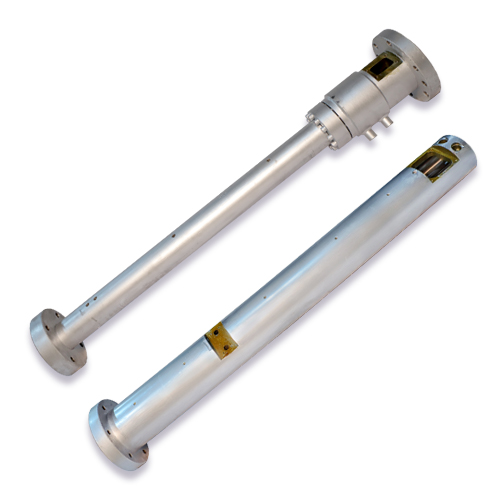
A customized barrel is a precision-engineered component manufactured to exact specifications defined by the processing application, material requirements, and machine configuration of the customer — rather than produced to a fixed standard catalogue design. The barrel is the stationary housing of an extruder within which the rotating screw operates and the polymer material is conveyed, compressed, melted, mixed, and metered from the feed inlet to the die head. As the component that defines the thermal environment, applies the processing pressure, and maintains the dimensional accuracy of the screw-to-bore clearance throughout the entire processing operation, the barrel is arguably the most thermally and mechanically complex component in any extrusion system. Its bore geometry, surface quality, material construction, and thermal management design are all critical determinants of extrusion output consistency, product quality, energy efficiency, and overall system reliability.
Customized Barrel
Price of Customized Barrel
|
Screw Minimum Size (mm or inch) |
Screw Maximum Size (mm or inch) |
Barrel Minimum Size (mm or inch) |
Barrel Maximum Size (mm or inch) |
Minimum Price (In Rs) |
Maximum Price (In Rs) |
|---|---|---|---|---|---|
|
20mm |
250mm |
20mm |
250mm |
Rs. 25,000 |
Rs. 15,00,000 |
While standard barrels serve the requirements of common thermoplastic processing applications effectively, a significant number of industrial extrusion operations involve materials, machine configurations, bore geometry requirements, or performance objectives that cannot be adequately served by an off-the-shelf barrel. Non-standard extruder models, obsolete or discontinued machine ranges, unusual bore diameters, specialty polymer formulations that demand specific bore alloy properties, or applications that require non-standard heating zone configurations all create the need for a customized barrel. In these situations, a purpose-engineered barrel is not merely a preference but a technical and operational necessity.
At Hi-Tech Screw Barrel Works, the design and manufacture of custom barrels is an established engineering service built on three decades of application experience and investment in advanced manufacturing capabilities including precision CNC boring and honing equipment, dedicated bimetallic centrifugal casting facilities, and comprehensive quality measurement systems. Our engineering team works directly with each customer to understand the specific requirements thoroughly before specifying a single dimension — translating those requirements into precision-engineered barrels that deliver the dimensional accuracy, bore surface quality, and thermal management performance the application demands.
Hi-Tech Screw Barrel Works is a leading manufacturer, exporter, and supplier of customized barrels from Ahmedabad, Gujarat, India — serving plastic processors, rubber processors, compounders, machinery builders, and research institutions across India and worldwide with precision-engineered custom barrel solutions backed by ISO 9001:2015 certified manufacturing.
Technical Specifications — Customization Parameters
| Parameter / Feature | Customization Range or Options |
|---|---|
|
Bore Diameter — Single Screw |
15 mm to 300 mm — or as per customer drawing |
|
Bore Diameter — Twin Screw Feed End |
45 mm to 200 mm — or as per customer drawing |
|
Bore Diameter — Twin Screw Discharge |
28 mm to 130 mm — or as per customer drawing |
|
Barrel Length |
As per extruder model, L/D ratio, or customer drawing |
|
L/D Ratio |
10:1 to 40:1 — any ratio engineered to application |
|
Outer Body Material |
41B Nitrided Steel or as specified |
|
Bore Construction |
Single-material nitrided or Bimetallic centrifugally cast |
|
Bore Liner Alloy |
Iron-based, Nickel-based, Stainless Steel — as per application |
|
Bore Surface Hardness |
HRC 55–68 depending on liner alloy and treatment |
|
Bore Liner Thickness |
3mm to 4 mm (typical for bimetallic construction) |
|
Bore Surface Finish |
Ra ≤ 0.4 µm — Mirror Honed |
|
Heating Zones |
2 to 12 zones — positioned as per design |
|
Zone Heater Seat Type |
Standard heater band seat or custom dimensions |
|
Cooling System |
Air cooling ducts or water cooling channels |
|
Vent Port Provision |
Atmospheric or vacuum vent — or none as required |
|
Vent Port Geometry |
Custom bore diameter, orientation, and position |
|
Thermocouple Type |
Type J or Type K — as per extruder specification |
|
Flange Geometry |
Feed and discharge flanges matched to extruder or customer drawing |
|
Barrel Type |
Single screw, parallel twin screw, conical twin screw |
|
Compatible Materials |
Any thermoplastic, elastomer, rubber, or specialty polymer |
|
Documentation |
Approved drawing, material certificates, inspection report, ultrasonic test |
|
Lead Time |
3 to 10 weeks depending on complexity and specifications |
Salient Features of Customized Barrel
Custom Bore Geometry Machined to Exact Specification
The bore of every custom barrel is machined to the precise diameter, taper angle, and length specified in the approved engineering drawing. For single-screw barrels this means a precisely cylindrical bore of the exact diameter and length required. For twin-screw barrels — including parallel and conical configurations — the twin-bore geometry is machined with exact bore diameters at both ends, the correct taper angle for conical configurations, the correct inter-bore centreline distance, and the correct bore overlap geometry at the intersection of the two bores. All of these parameters are machined to micron-level tolerances on our dedicated CNC horizontal boring machines.
Bimetallic Bore Liner for Extended Wear Life
For applications where bore wear is the primary factor limiting service life, the barrel can be manufactured with a bimetallic bore liner centrifugally cast from a high-alloy composite material and metallurgically bonded to the inner surface of the structural outer barrel body. The centrifugally cast liner — typically 1.5 to 3 mm thick — achieves a bore surface hardness of HRC 58–65, providing dramatically superior resistance to abrasive wear compared to a standard nitrided bore surface. Bimetallic construction extends barrel bore service life by a factor of three to five times compared to a standard single-material barrel in equivalent abrasive applications.
Material Grade Selected for the Application
The outer body and bore liner materials are selected based on the specific mechanical, thermal, and chemical demands of the processing application. Iron-based high-alloy composites provide excellent abrasion and corrosion resistance for most PVC and polyolefin applications. Nickel-based alloy liners provide superior corrosion resistance for processing halogenated polymers, fluoropolymers, and chemically aggressive specialty compounds. Stainless steel bore linings are available for food contact, pharmaceutical, and clean processing applications.
Custom Heating Zone Configuration
The number, positioning, and dimensions of heating zones are specified to match the temperature profile requirements of the specific polymer being processed, the length of the barrel, and the functional zones of the screw design. Standard barrels typically offer three to seven heating zones. Custom configurations can extend to twelve or more zones for long barrels processing polymers with complex temperature profile requirements. All heater band seats are CNC machined to close tolerances ensuring intimate, uniform contact between the heater bands and the barrel body for efficient heat transfer and accurate temperature control.
Custom Cooling System Design
The cooling system is engineered to match the specific thermal management requirements of the application. Air-cooled barrels use machined axial or radial air ducts within the barrel body through which forced air is directed by fans or blowers. Water-cooled barrels incorporate internal water channels drilled or cast into the barrel body providing significantly higher cooling capacity and faster thermal response than air cooling — suitable for high-speed extrusion lines and applications requiring precise high-speed temperature cycling. All customization parameters of the cooling channel routing, geometry, and flow rate capacity can be specified based on the thermal management demands of the application.
Vent Port Design and Positioning
For applications requiring devolatilization of moisture, residual monomers, processing solvents, or absorbed gases from the polymer melt, a vent port or multiple vent ports can be incorporated into the custom barrel design. The vent port position is determined by the screw design — specifically the position of the decompression zone in the vented screw. The vent port geometry including the bore diameter, the orientation of the vent opening, and whether atmospheric or vacuum extraction is to be used are all customization parameters machined to precise geometry in the finished barrel.
Precision Flange Geometry for Leak-Free Assembly
The feed-end and discharge-end flanges are machined to exact dimensions and tolerances to ensure correct, leak-free assembly with the extruder gearbox at the feed end and the die head or adaptor plate at the discharge end. Flange face flatness, perpendicularity to the barrel axis, bolt-circle pitch circle diameter, bolt hole positions and dimensions, and any sealing face geometry are all precision-machined to the customer drawing or reverse-engineered from the existing machine flange — essential for preventing melt leakage under the high pressures generated during extrusion.
Corrosion-Resistant Bore Alloy Options
For processing polymers that generate corrosive by-products during extrusion — particularly PVC and CPVC which release hydrochloric acid when thermally degraded, and fluoropolymers containing halogenated additives — our facility offers custom barrels with specialised corrosion-resistant bore liner alloys. Nickel-based alloy liners with high chromium and molybdenum content provide superior resistance to acid corrosion. Stainless steel linings provide a combination of corrosion resistance and cleanability suitable for clean processing applications. Selection of the appropriate corrosion-resistant alloy is part of the technical consultation process for every customized barrel project.
OEM Compatible and Reverse Engineered from Sample
A significant proportion of custom barrel orders originate from processors operating extruder models for which the original equipment manufacturer no longer supplies replacement barrels. Hi-Tech Screw Barrel Works provides a comprehensive reverse engineering service for these customers. The worn or damaged original barrel is measured using precision instruments to capture all critical dimensions including bore diameter at multiple cross-sections, flange geometry, heater band seat positions, thermocouple port positions, and cooling channel routing. A complete manufacturing drawing is prepared and submitted to the customer for review and approval before production begins.
Full Quality Documentation and Traceability
Every custom barrel from our facility is supplied with a complete quality documentation package including the approved engineering drawing, the material test certificate for the barrel body material, the bore liner alloy certificate, the dimensional inspection certificate recording all critical bore and external dimensions, the bore surface hardness test report, the ultrasonic test report confirming bore liner bonding integrity for bimetallic barrels, and the bore surface roughness measurement record. This complete documentation package supports the customer’s incoming inspection, quality management system, and maintenance planning records.
Applications




Working Mechanism — How Customization Improves Screw Performance
Feed Zone — Thermal and Geometric Design
At the feed end, the bore geometry defines the maximum intake volume available for the feed material. The bore diameter at the feed end and the surface finish of the bore in the feed zone influence the efficiency of material intake and the degree of friction-driven heat generation. The heating zone design at the feed end is customized to provide the correct temperature profile for initiating controlled compaction of the feed material without premature melting that would cause bridging or plugging of the feed throat.
Compression Zone — Bore Quality and Thermal Precision
In the compression zone, the bore surface quality plays a critical role in heat transfer from the barrel wall to the advancing polymer material. A mirror-honed bore surface with Ra 0.4 µm or better maximises the contact area between the polymer and the barrel wall, facilitating efficient conductive heat transfer that supports uniform progressive melting of the polymer. The precision of the bore taper in a conical barrel directly determines the compression ratio achieved by the screw-barrel assembly and therefore the melt pressure and heat generation in this zone.
Melting Zone — Temperature Control
In the melting zone, the heating zones deliver the primary thermal energy input for polymer plasticization. The accuracy of temperature control depends directly on the quality of the heater band seats, the accuracy of thermocouple port positioning, and the thermal conductivity of the barrel material. A barrel with precision-machined heater band seats — ensuring intimate, gap-free contact between the heater bands and the barrel body surface — delivers superior temperature control accuracy compared to a barrel with worn, corroded, or poorly machined heater seats.
Mixing Zone — Bore Dimensional Accuracy
In the mixing zone, the dimensional accuracy of the bore is critical to maintaining the correct screw-to-bore clearance that determines the shear rate applied to the polymer melt in the clearance gap. A bore that has maintained its original dimensional accuracy due to the high hardness of a bimetallic liner delivers a consistent, defined shear rate that produces uniform melt homogeneity. A worn bore with enlarged clearance allows melt backflow that bypasses the mixing action of the screw, resulting in poor mixing and non-uniform additive dispersion.
Why Choose Hi-Tech Screw Barrel Works
Deep Application Engineering Knowledge
Our engineering team at Hi-Tech Screw Barrel Works has accumulated over three decades of specialised experience in barrel design, bore liner selection, and the relationship between barrel bore geometry, surface quality, thermal design, and extrusion processing performance. This depth of knowledge enables us to move efficiently from a detailed understanding of the customer application to a complete barrel specification without the extended design iteration that a less experienced manufacturer would require.
In-House Bimetallic Casting, CNC Boring, and Precision Honing
Hi-Tech Screw Barrel Works operates dedicated centrifugal casting equipment for bimetallic bore liner application, combined with precision CNC horizontal boring machines, cylindrical grinding machines, and high-precision bore honing equipment. Every stage of customized barrel production — from centrifugal casting of the bore liner through CNC boring and precision honing to final dimensional inspection — is performed in-house without outsourcing any critical manufacturing process. This complete in-house capability gives full control over bore liner quality, bore dimensional accuracy, bore surface finish, and production schedule.
Reverse Engineering and OEM Replacement
We offer a comprehensive reverse engineering service for customers who require replacement barrels for obsolete, non-standard, or imported extruder models for which original equipment manufacturer spares are no longer available. Using precision bore measurement equipment, CMM dimensional analysis, and CAD drawing preparation, our engineering team can recreate the complete dimensional specification of any barrel from a worn or damaged sample and produce a complete manufacturing drawing for customer approval before production begins.
ISO 9001:2015 Certified Quality Management System
Every customized barrel is manufactured and inspected under our ISO 9001:2015 certified quality management system. Bore diameter is measured at multiple cross-sections along the barrel length and at multiple angular positions. Bore liner bonding integrity is verified by ultrasonic testing for bimetallic barrels. Bore surface hardness is checked on the finished bore surface. Surface roughness is verified using a calibrated profilometer. All results are recorded and supplied with the barrel in a complete quality documentation package.
FAQs
What parameters of a barrel can be customized when ordering from Hi-Tech Screw Barrel Works?
Almost every design parameter of an extruder barrel can be customized when ordering a custom barrel. For single-screw barrels, customizable parameters include the bore diameter and length, the L/D ratio, the bore liner construction and alloy grade, the bore surface hardness and finish, the number and positioning of heating zones, the heater band seat dimensions, the thermocouple port type and position, the cooling system design — whether air-cooled or water-cooled — and the geometry of the feed-end and discharge-end flanges including face flatness, bolt-circle dimensions, and any sealing face details. For twin-screw barrels, whether parallel or conical, all of the above parameters apply and additional customization parameters include the bore diameter at both the feed end and discharge end for conical configurations, the inter-bore centreline distance, the bore overlap geometry, and the taper angle. Vent port provisions including bore diameter, position, and orientation can be incorporated for devolatilization applications. Material grade for the outer body and bore liner alloy for bimetallic barrels can both be customized to match the specific abrasion and corrosion requirements of the processing application. Our engineering team consults with each customer on all of these parameters as part of the standard project initiation process.
How does Hi-Tech Screw Barrel Works approach a new customized barrel project?
Every custom barrel project follows a structured process that begins with a comprehensive application review and proceeds through engineering drawing preparation, customer approval, and in-process quality-controlled manufacturing to final inspection and dispatch. The application review phase involves gathering detailed information about the extruder model, the polymer or compound being processed, the processing conditions including temperature profile and throughput rate, any specific performance problems with the existing barrel that the new design needs to address, and any dimensional constraints imposed by the existing extruder installation. Based on this information, our engineering team prepares a complete barrel specification encompassing all dimensional, bore liner material, heating zone, and cooling system parameters. This specification is documented in a complete engineering drawing which is submitted to the customer for review and formal approval before production is authorised. Production commences only after the drawing is formally approved. In-process dimensional checks are performed at each key manufacturing stage and the complete dimensional inspection results are reviewed before the barrel is released for dispatch.
Can Hi-Tech Screw Barrel Works manufacture a customized barrel from a worn or damaged original sample?
Yes. Manufacturing replacement barrels from worn or damaged original samples is one of the most frequently requested services at our facility and our engineering team has extensive experience in dimensional reverse engineering of barrels of all types and sizes. The reverse engineering process begins with external dimensional measurement of the barrel body including overall length, outer diameter at multiple points along the length, and all flange dimensions. The bore is measured at multiple cross-sections along the length and at multiple angular positions around the bore circumference to map both the nominal bore geometry and any wear-induced dimensional changes. For twin-screw barrels, the inter-bore centreline distance, bore overlap geometry, and for conical barrels the bore taper angle are all measured and recorded. Heater band seat positions and dimensions, thermocouple port positions, and cooling channel connections are documented. From these measurements, a complete nominal manufacturing drawing is prepared which is submitted to the customer for review. Customers are encouraged to provide any available original documentation alongside the physical sample as this greatly assists the dimensional reconstruction process. Once the drawing is approved, production proceeds under our standard in-process quality control programme.
What bore liner materials are used for customized barrels and how is the selection made?
The bore liner material is one of the most performance-critical selections in the entire design and is chosen based on a combination of the abrasion characteristics of the compound being processed and the corrosion risk posed by the polymer chemistry and any degradation by-products. For standard thermoplastic applications such as polyolefins and standard rigid PVC formulations with moderate filler content, an iron-based high-alloy composite centrifugally cast liner achieves a bore surface hardness of HRC 60–65 and provides an excellent balance of abrasion resistance, corrosion resistance, and cost. For highly abrasive applications such as heavily filled PVC compounds, glass-fibre-reinforced engineering polymers, or wood-plastic composite formulations, a nickel-based composite alloy liner with superior impact toughness is preferred. For processing chemically aggressive polymers such as CPVC, fluoropolymers, and chlorinated compounds, a specifically selected nickel-chromium-molybdenum alloy or stainless steel liner grade with high resistance to halogen-based corrosion is used. For food contact, pharmaceutical, and clean processing applications, a stainless steel bore lining compatible with the applicable regulations is supplied. Bore liner material selection is a formal step in the technical consultation process for every customized barrel order at Hi-Tech Screw Barrel Works.
What is the expected service life of a customized barrel from Hi-Tech Screw Barrel Works?
The service life of a custom barrel depends on several interacting factors including the abrasiveness of the compound being processed, the processing temperature and screw speed, the bore liner alloy grade specified, and the maintenance practices followed by the operator — particularly purging discipline and cold-start prevention. For standard rigid PVC pipe extrusion using virgin compound with moderate calcium carbonate filler content, a high-quality bimetallic barrel from Hi-Tech Screw Barrel Works typically delivers a bore service life of 12,000 to 20,000 operating hours or more before bore wear-related issues require attention. This is significantly longer than the service life achievable with a standard nitrided single-material barrel, which typically requires refurbishment or replacement after 4,000 to 6,000 hours in the same application. For highly abrasive applications such as heavily filled compounds or WPC with wood flour, bore liner service life may be reduced and a higher-abrasion-resistance nickel-based liner alloy should be specified. Our engineering team advises on the appropriate bore liner specification for each application to ensure the barrel delivers the service life the customer requires.
How is bore wear in a customized barrel monitored and when should refurbishment be planned?
Bore wear monitoring is an essential part of any proactive maintenance programme for any extrusion line. The primary indicator of bore wear is a progressive increase in the bore diameter measured at multiple cross-sections along the barrel length and at multiple angular positions around the bore circumference using calibrated air gauges, precision bore micrometers, or dial bore gauges. A baseline bore diameter measurement should be taken when the customized barrel is first installed, and subsequent measurements taken at quarterly intervals and compared against the baseline to track wear rate. As a general guideline, when the bore diameter at any measurement point has increased by more than 0.2 to 0.3 mm from the baseline value, the screw-to-bore clearance has reached a level where output pressure, melt quality, and product dimensional consistency will be noticeably affected, and bore refurbishment or replacement should be planned. Secondary indicators include a progressive reduction in output rate at constant screw speed, an increase in drive motor current consumption, and the appearance of surface quality defects on the extrudate. All bore diameter measurements should be recorded in a formal maintenance log to enable accurate tracking of wear rate and proactive planning of refurbishment within a planned maintenance shutdown.
Can a worn customized barrel bore be refurbished by Hi-Tech Screw Barrel Works?
Yes. We provide comprehensive bore refurbishment services for worn custom barrels that can restore the bore to its original dimensional specification at substantially lower cost than manufacturing a complete replacement barrel. The refurbishment process begins with a complete bore diameter measurement at multiple cross-sections and angular positions to map the extent and distribution of bore wear and confirm that the outer barrel body is structurally sound and suitable for refurbishment. Based on this assessment, the appropriate refurbishment method is selected. For moderate bore wear, the worn bore is re-bored on our precision horizontal boring machine to remove the worn liner surface, and a new bimetallic sleeve manufactured to the correct interference fit dimensions and the appropriate liner alloy specification is thermally fitted, pressed, and bonded into the re-bored barrel body. The new bore sleeve is then finish-bored and precision-honed to the original bore diameter with the required surface finish, and the bore is dimensionally inspected at all measurement points before the barrel is approved for return to service. For minor bore wear, re-honing of the bore surface alone can restore the required bore surface finish and bring the bore back within the dimensional tolerance at significantly lower cost and with a shorter turnaround time.
What quality checks does Hi-Tech Screw Barrel Works perform on customized barrels before dispatch?
Quality assurance at our facility is a comprehensive multi-stage process integrated at every step from incoming raw material through final inspection. Incoming structural steel for the outer barrel body is checked against the material test certificate and independently verified for chemical composition and mechanical properties before entering production. Incoming bore liner alloy material is similarly verified before being processed through centrifugal casting. After centrifugal casting of the bore liner, ultrasonic testing is performed on the complete barrel to verify the metallurgical bonding integrity between the liner and the outer barrel body across the entire bore surface area, detecting any delaminated or unbonded areas before further machining. Following CNC boring and precision honing, the bore diameter is measured at a minimum of five cross-sections along the barrel length and at four angular positions at each cross-section using calibrated air gauges and precision bore micrometers. Bore surface hardness is verified using a calibrated Rockwell hardness tester on the finished honed bore surface. Bore surface roughness is measured using a calibrated profilometer to verify that the specified Ra 0.4 µm or better finish has been achieved. All external dimensions including overall length, flange face flatness, bolt-circle dimensions, thermocouple port positions, and heater band seat dimensions are verified against the approved engineering drawing. For water-cooled barrels, all cooling channels are pressure-tested to verify leak-free integrity. The complete quality documentation package is compiled and reviewed before the barrel is approved for packaging and dispatch.
How does the number and positioning of heating zones in a customized barrel affect processing performance?
The number and positioning of the heating zones in a customized barrel have a direct and significant influence on the operator’s ability to establish and maintain the precise temperature profile along the barrel length required for consistent high-quality extrusion processing. A greater number of independently controlled heating zones provides finer resolution of the temperature profile, allowing a more precisely graduated temperature ramp from feed to discharge — particularly important when processing polymers with narrow thermal processing windows such as rigid PVC or when processing complex compound formulations with multiple additive components of different temperature sensitivity. The positioning of zone boundaries is equally important. Zone boundaries should ideally be aligned with the boundaries between the functional zones of the screw design so that the thermal conditions applied by each barrel zone correspond to the processing function being performed by the screw in that region. A mismatch between zone boundaries and screw functional zones can create thermal non-uniformities at zone transitions that compromise melt homogeneity and product quality. At Hi-Tech Screw Barrel Works, the heating zone configuration is specified in conjunction with the screw design to ensure optimal correspondence between the thermal management capability of the barrel and the processing functions of the screw.
What is the significance of the bore surface finish in a customized barrel?
The bore surface finish of a customized barrel — expressed as the average surface roughness Ra in micrometres — has several important influences on extrusion processing performance. A smoother bore surface with a lower Ra value provides a lower-friction interface between the barrel bore and the thin film of polymer melt that forms between the bore surface and the screw flight tips during processing. This lower friction minimises the tendency for polymer to adhere to and stagnate on the bore surface — particularly important for thermally sensitive polymers such as PVC, where localised stagnation can lead to thermal degradation manifesting as colour contamination, discolouration, or black specks in the extrudate. A smooth bore surface also provides a more consistently defined screw-to-bore clearance across the full bore circumference and length, because it eliminates the dimensional variation that surface roughness introduces at the micro-scale and which can create localised areas of disproportionate wear. Additionally, a smooth bore surface is easier to clean during purging operations, reducing material transition time and purging compound consumption between production batches. At our facility, all custom barrel bore surfaces are honed to Ra 0.4 µm or better using our precision bore honing equipment.
What causes premature bore wear in a customized barrel and how can it be prevented?
Premature bore wear in a customized barrel is caused by a combination of abrasive mechanical wear, chemical corrosion, and operational damage mechanisms that often act simultaneously to accelerate bore material removal beyond the rate expected for the bore liner alloy selected. The primary abrasive wear mechanism is the continuous rubbing contact between hard mineral filler particles carried in the polymer melt and the bore surface as the melt is sheared between the rotating screw flight tips and the bore wall. The rate of abrasive wear is directly determined by the hardness of the bore liner alloy relative to the hardness of the abrasive particles in the melt — which is why a high-quality bimetallic liner dramatically outlasts a standard nitrided bore in abrasive applications. The primary corrosive mechanism is the attack of the bore surface by hydrochloric acid generated during thermal degradation of PVC and CPVC compounds, particularly in the feed and early compression zones. Cold-starting is the most acute cause of sudden bore damage — running the extruder with a solidified polymer charge remaining in the barrel imposes extreme radial forces on the bore surface that can cause immediate severe scoring and gouging of the liner surface. Correct warm-up procedures, thorough purging at the end of every production run, and correct stabilizer loading in PVC formulations are the primary preventive measures.
Can vent ports be incorporated into a customized barrel and what design considerations apply?
Yes. Vent ports can be incorporated into custom barrels as a design feature for extrusion applications where devolatilization of the polymer melt is required during processing. Devolatilization is needed when the polymer contains moisture, residual polymerization monomers, processing solvents, or absorbed atmospheric gases that would cause visible defects such as surface bubbles, voids, splay marks, or streaks in the extrudate if they remained in the melt through to the die. The position of the vent port in the customized barrel must be precisely aligned with the decompression zone of the vented screw design — where the screw channel depth increases to reduce the melt pressure to near-atmospheric, allowing the volatiles to escape. The vent port geometry including its bore diameter, the orientation of the vent opening, and whether the vent is to be used for atmospheric venting or vacuum-assisted venting through a connected vacuum pump are all design parameters. The vent port opening must be large enough to allow free escape of volatiles from the decompressed melt but not so large that the structural integrity of the barrel body is compromised at the vent zone. Our facility designs and machines vent ports to precise geometry in custom barrels as part of an integrated design process that considers both the barrel vent port geometry and the corresponding screw decompression zone design together to ensure reliable devolatilization performance across the full operating throughput range.
What maintenance practices are recommended for customized barrels to maximise service life?
The service life of a customized barrel depends not only on the quality of the bore liner construction but significantly on the maintenance practices adopted by the operator. The most important maintenance practice for barrel longevity is the prevention of cold-starting. Operating the extruder before the barrel has reached the correct processing temperature — with solidified polymer remaining in the barrel from the previous production run — is the single most common cause of acute bore surface damage. Always follow the prescribed warm-up protocol and allow sufficient soak time at full temperature before starting the screws. Purge the barrel thoroughly with a compatible purging compound or natural polymer at the end of every production run or before every planned shutdown to remove all residual process polymer, preventing carbonisation and acid formation that cause progressive bore corrosion during shutdown. Conduct quarterly bore diameter measurements at multiple points along the barrel length using calibrated instruments and record all measurements in a maintenance log to track bore wear rate and plan refurbishment at the optimum time. Inspect all heater band seats, thermocouple ports, flange faces, and cooling channel connections during every planned maintenance shutdown for signs of wear, corrosion, or mechanical damage. Our technical support team at Hi-Tech Screw Barrel Works is available to advise on application-specific maintenance schedules and bore wear monitoring protocols.
How does the customized barrel contribute to energy efficiency in the extrusion process?
The design quality and condition of the custom barrel have a significant direct influence on the specific energy consumption of the extrusion process measured in kilowatt-hours per kilogram of extrudate produced. The thermal management efficiency of the barrel is the first contributing factor. A barrel with precision-machined heater band seats that ensure intimate, gap-free contact between the heater bands and the barrel body surface transfers thermal energy from the heaters to the barrel bore and polymer melt with high efficiency and minimal thermal losses through air gaps or contact resistance. This reduces the heater power required to maintain the target temperature profile and the frequency and duration of heater on-cycles. The bore surface condition is the second contributing factor. A worn bore with enlarged screw-to-bore clearance allows increasing melt backflow from the high-pressure discharge zone to the lower-pressure feed zone through the enlarged clearance gap. This melt backflow represents wasted pumping work that increases the specific energy required to maintain the target output rate. Maintaining the bore clearance within the design specification through timely refurbishment or replacement of the customized barrel is therefore directly linked to maintaining the energy efficiency of the extrusion process at its design level.
Can Hi-Tech Screw Barrel Works supply customized barrels for both single-screw and twin-screw extruders?
Yes. We manufacture custom barrels for single-screw extruder configurations and for both parallel twin-screw and conical twin-screw extruder configurations. For single-screw extruder barrels, the customization covers all parameters of the cylindrical bore geometry including bore diameter and length, the bore liner construction and alloy grade, the heating and cooling zone configuration, the vent port design if required, and the feed-end and discharge-end flange geometry. For parallel twin-screw extruder barrels, the twin-bore geometry including the bore diameter, the inter-bore centreline distance, and the bore overlap geometry are precision-machined to the customer specification. For conical twin-screw extruder barrels, the additional parameters of the bore taper angle and the bore diameters at both the feed end and the discharge end are customization parameters. In all twin-screw configurations, the parallel alignment of the two bore axes and the consistency of the bore diameter at all measurement positions are critical to correct screw operation and are verified in the dimensional inspection before dispatch. Our manufacturing capability covers bore diameters from 15 mm for small pilot-scale barrels up to 300 mm for large production-scale barrels for single-screw configurations, and corresponding sizes for twin-screw configurations.
What is the difference between a customized barrel and a standard OEM replacement barrel?
A standard OEM replacement barrel is manufactured with the primary objective of replicating the original equipment manufacturer’s specification for a specific extruder model as closely as possible — matching the original bore diameter, length, heating zone configuration, flange geometry, and material specification with the goal of restoring the extruder to its original performance level. A custom barrel by contrast involves deliberate modification of one or more design parameters relative to the original or standard specification with the intention of improving processing performance, addressing specific application problems, or adapting the component to changed processing requirements. Common customization improvements relative to an OEM replacement include upgrading the bore liner alloy to extend service life in an abrasive application, adding or repositioning heating zones to better match a changed processing temperature profile, incorporating a vent port that was not present in the original barrel to address moisture or volatile contamination issues in the extrudate, or modifying the flange geometry to interface with upgraded gearbox or die head components. Both standard OEM replacement barrels and fully customized barrels are supplied at our facility with the appropriate engineering approach applied depending on the customer’s specific requirements.
How are customized barrels packaged and protected during delivery by Hi-Tech Screw Barrel Works?
Hi-Tech Screw Barrel Works applies purpose-designed protective packaging to all custom barrel shipments to ensure that precision-bored, honed, and surface-treated components arrive at the customer facility in perfect condition regardless of shipping distance or transit duration. After final inspection, all bore surfaces and machined external surfaces are coated with a high-quality rust-preventive oil. The bore openings at both the feed end and the discharge end are sealed with close-fitting precision-machined plastic plugs to protect the honed bore surface from mechanical damage and contamination during transit and storage. The barrel is then individually wrapped in VCI poly film — Vapour Corrosion Inhibitor film that actively prevents oxidation of all metal surfaces during storage and transit. The VCI-wrapped barrel is placed in a purpose-built wooden crate with foam or rubber support cradles sized and positioned to support the barrel securely without any contact between the outer barrel surface and the crate structure during handling and transport. All heater band seats, thermocouple ports, and flange faces receive additional foam padding protection inside the crate. For international export shipments, all wooden packaging materials are heat-treated in compliance with ISPM-15 international phytosanitary standards. Standard lead times are typically 3 to 6 weeks from drawing approval for standard sizes and 5 to 10 weeks for complex custom specifications.
What are the most common reasons customers request a customized barrel from Hi-Tech Screw Barrel Works?
The most common reasons customers request custom barrels fall into several recurring categories. The most frequent reason is the unavailability of a standard replacement barrel for an obsolete, non-standard, or imported extruder model for which the original equipment manufacturer no longer supplies spare components and for which no catalogued replacement is available. The second most common reason is the need to upgrade the bore liner specification from the standard or original material grade to a higher-performance alloy in order to extend service life in an application where the current barrel is wearing prematurely due to highly abrasive compound formulations or corrosive processing conditions. The third common reason is a change in processing requirements on an existing extruder — such as a change to a more demanding polymer formulation, a significant increase in target throughput rate, or the need to add a vent port for devolatilization — that requires modification of the barrel design beyond what is achievable by simply replacing with the existing specification. The fourth common reason is the need for customized barrels as original equipment components for new extruder designs or rebuild projects on existing extrusion lines where the performance targets require a purpose-engineered barrel design. A fifth reason, particularly relevant to research and development operations, is the need for barrels with non-standard configurations for experimental processing programmes.
How does Hi-Tech Screw Barrel Works handle confidentiality and intellectual property for custom barrel projects?
Hi-Tech Screw Barrel Works treats all customer-specific engineering information as strictly confidential. Engineering drawings, dimensional specifications, proprietary bore geometry data, application information, process conditions, and customer identity are all held in strict confidence and are not disclosed to any third party under any circumstances without the explicit written consent of the customer. Non-disclosure agreements are available and routinely signed at the customer’s request before any exchange of technical information for a new project. Our manufacturing operations are conducted entirely within our Ahmedabad facility with no outsourcing of any critical step — including CNC boring, honing, centrifugal casting, or heat treatment — ensuring that all customer-specific design information remains within our controlled production environment throughout the manufacturing process. Customer drawings, specifications, and measurement data are stored securely and are accessible only to the personnel directly assigned to the specific project. This confidentiality commitment applies equally to OEM customers who supply their own drawings for contract manufacture and to customers for whom our engineering team develops the barrel specification.
What after-sales support does Hi-Tech Screw Barrel Works provide for customized barrels?
Hi-Tech Screw Barrel Works provides comprehensive after-sales technical support as a standard part of the service for every customized barrel project. Our engineering team is available to provide guidance on commissioning procedures, correct warm-up protocols for the new barrel, bore wear monitoring intervals and measurement procedures, and maintenance practices specific to the custom design and the processing application. If a customer experiences unexpected processing problems after installation of a new customized barrel — such as unusual output rate reduction, excessive melt temperature variation, or abnormal motor current draw — our team will work collaboratively to diagnose the cause and recommend corrective action. For customers operating critical production lines, on-site commissioning support at the customer’s facility can be arranged. When a customized barrel approaches the end of its service life as indicated by bore wear measurements, our team advises on the optimal time for bore refurbishment or barrel replacement and can prepare the necessary engineering documentation and production schedule to minimise production disruption during the changeover. We also maintain the engineering drawings and manufacturing records for every custom barrel project in our quality management system, enabling rapid turnaround for repeat orders or design updates.
Why should polymer processors choose Hi-Tech Screw Barrel Works as their partner for customized barrels?
Polymer processors choose Hi-Tech Screw Barrel Works as their partner for custom barrels because the combination of engineering expertise, manufacturing capability, and quality discipline we bring to every project delivers components that perform exactly as specified, maintain their bore geometry and surface quality over a long service life, and are backed by a technical support team that remains available throughout the operational life of the barrel. Our three decades of specialised experience in barrel design, bore liner selection, bimetallic construction, and extrusion processing outcomes means our engineering team contributes genuine application knowledge to every project — not just manufacturing execution. Our fully in-house manufacturing capability — covering centrifugal bore liner casting, CNC boring, honing, and comprehensive metrology with no outsourcing of critical processes — gives us complete control over quality and delivery. Our ISO 9001:2015 certified quality management system ensures this quality is documented, verified, and consistently reproduced. Our after-sales technical support means that customers who install a customized barrel from Hi-Tech Screw Barrel Works gain a knowledgeable long-term partner who can advise on bore wear monitoring, maintenance planning, refurbishment scheduling, and processing optimisation throughout the operational life of the component. This complete package of engineering knowledge, manufacturing capability, and quality assurance makes Hi-Tech Screw Barrel Works the trusted choice among plastic processors, rubber processors, compound manufacturers, machinery builders, and research institutions across India and internationally — from our manufacturing base in Ahmedabad, Gujarat, India.
WHY CHOOSE US
Your Trusted Partner in Success
At Hi-Tech Screw Barrel Works, we are dedicated to providing top-tier services with a personal touch. With over 20+ years of experience and a proven track record of success, we prioritize your needs, ensuring customized solutions that drive results. Our team of experts stays ahead of industry trends, delivering innovative strategies tailored specifically for your business.
Unmatched Expertise
Experts in screw barrel manufacturing for 20+ years
State-of-the-Art Manufacturing
Precision screw barrels, high-tech manufacturing
Customer-Centric Approach
Personalized solutions with top-notch customer support
















Expertise and Experience
With over 22 years of industry experience, we are leaders in the manufacturing of single screws, backed by a team of skilled professionals.

Advanced Manufacturing Facilities
Our state-of-the-art production facility is equipped with cutting-edge technology and CNC machines, ensuring precision and consistency in every component we manufacture.

Commitment to Quality
We adhere to stringent quality control standards throughout the manufacturing process, ensuring that each single screw meets our high-quality standards and exceeds customer expectations.

Customer-Centric Approach
We prioritize customer satisfaction and strive to provide personalized solutions and exceptional service. Our dedicated team is ready to assist you with technical expertise and support.