
Screw Barrel Manufacturer in Chennai
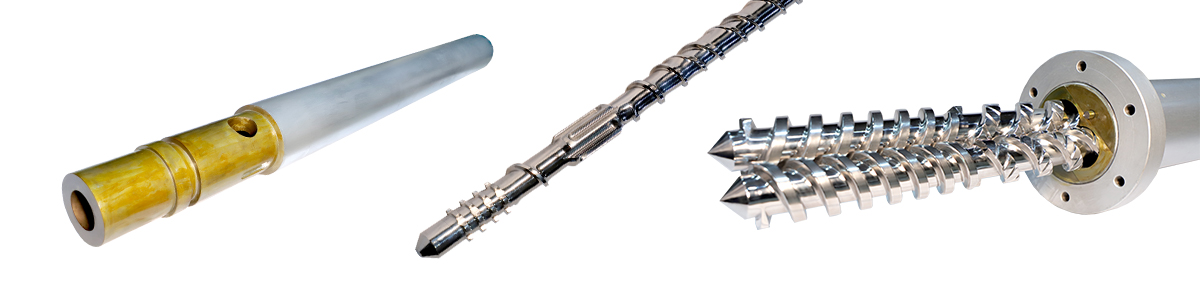
Screw Barrel Manufacturer in Chennai
South India's Premier Industrial Hub and Why Screw Barrel Quality Matters
Chennai stands as Tamil Nadu’s economic engine and one of India’s most industrially diversified metropolitan regions. As the country’s automotive capital, a leading hub for electronics manufacturing, a significant centre for plastic pipe and packaging production, and one of the largest petrochemical processing zones in South India, Chennai’s factory floors run around the clock — and at the core of nearly every polymer processing line is one precision component that determines everything from throughput to product quality: the screw barrel.
When the screw barrel underperforms — whether through premature wear, dimensional inconsistency, or metallurgical compromise — the consequences ripple across the entire production chain. Output drops, energy consumption climbs, scrap rates rise, and machine maintenance intervals shorten dramatically. For a Chennai plant running three shifts against an export or OEM delivery schedule, even a single unplanned stoppage is a costly event.
This is precisely why manufacturers across Chennai’s SIPCOT Irungattukottai, Ambattur Industrial Estate, Sriperumbudur Special Economic Zone, Manali Petrochemical Corridor, and Thiruvallur industrial belt turn to Hi-Tech Screw Barrel Works — a manufacturer with over 25 years of uninterrupted domain expertise, 5,845 completed projects, 840 satisfied clients, and a 47-strong team of precision engineering professionals dedicated exclusively to screw barrel manufacturing. As a trusted screw barrel manufacturer in Chennai, we supply standard and customised Single Screw, Twin Screw, Bimetallic, Barrier, Vented, and Groove Feed assemblies engineered to match your exact machine specifications, polymer chemistry, and production throughput demands.
Chennai's Industrial Landscape: Where High-Performance Screw Barrels Are a Daily Necessity
Greater Chennai’s industrial geography is exceptionally broad — spanning a northern petrochemical belt, a western automotive and electronics corridor, a southern plastic processing zone, and deep-port-linked packaging infrastructure along the Bay of Bengal coastline. The city and its satellite zones host over 50,000 manufacturing units in organised and semi-organised sectors, making it one of the densest industrial clusters in peninsular India. For screw barrel demand, this industrial density creates a permanent, high-volume requirement for both replacement assemblies and performance-upgrade solutions.
Key industrial zones where screw barrel demand is concentrated include SIPCOT Irungattukottai (automotive OEM and Tier-1 components), Ambattur Industrial Estate (plastics, packaging, cable), Sriperumbudur SEZ (electronics and appliance manufacturing), Manali Petrochemical Industrial Area (PVC, HDPE compounding), Thiruvallur District (light engineering and plastic products), Gummidipoondi Industrial Area (chemical processing and masterbatch), and the Chennai Port–Ennore Port industrial corridor (packaging, pipe extrusion, and bulk materials).
Automotive and Auto-Components Manufacturing
Chennai produces approximately one-third of India’s automobiles and nearly 40% of its auto components, earning its designation as the ‘Detroit of Asia.’ Tier-1 and Tier-2 suppliers in Sriperumbudur, Oragadam, and Irungattukottai run high-speed injection moulding machines consuming nylon, ABS, PP, and glass-filled engineering polymers. Screw barrels on these lines are subjected to extreme abrasive wear from reinforced compounds and must maintain tight dimensional tolerances to achieve consistent gate-to-gate cycle times. Bimetallic and nitrided screw barrels from Hi-Tech are the preferred choice for Chennai’s automotive injection moulding operators.
PVC and HDPE Pipe Extrusion
Tamil Nadu’s urban infrastructure expansion — driven by Smart Cities Mission investments in Chennai, Coimbatore, and Madurai — has accelerated demand for CPVC, uPVC, and HDPE pipes. The Manali and Ambattur zones house a cluster of pipe extrusion manufacturers running twin-screw and single-screw extruders. Twin screw barrel assemblies for PVC pipe lines require precisely calibrated conical geometry, corrosion-resistant lining, and stable compression ratios to prevent material degradation during the heat-sensitive PVC processing window.
Flexible and Rigid Packaging
Chennai’s proximity to FMCG, pharma, and food processing hubs creates sustained demand for blown film, CPP, BOPP, and thermoformed packaging materials. Film extrusion plants in Ambattur and Thiruvallur run mono-layer and multi-layer lines continuously, with screw barrels required to maintain melt homogeneity across LDPE, LLDPE, HDPE, and EVA blends. Output consistency in film thickness and clarity is directly determined by the screw geometry and barrel bore integrity — both engineered to specification in our production facility.
Electronics and Electrical Components
The Sriperumbudur SEZ and the broader Kancheepuram electronics manufacturing belt — home to major OEMs and contract manufacturers — process engineering polymers including flame-retardant ABS, PC, PBT, and PEEK for casings, connectors, and insulation components. These materials are highly abrasive and thermally sensitive; screw barrels must combine wear resistance with precise thermal transfer characteristics to prevent degradation and maintain colour fidelity in high-visibility consumer electronics components.
Cable Wire and Insulation Extrusion
Chennai’s cable manufacturing industry — serving power, telecom, data, and automotive wiring harness segments — operates crosshead and straight extrusion lines processing XLPE, PVC, HDPE, and TPE compounds. Vented screw barrels and groove feed configurations are widely used in this segment to handle moisture-sensitive compounds and maintain consistent insulation wall thickness across high-speed production runs.
Masterbatch and Polymer Compounding
Gummidipoondi and the Thiruvallur district host a significant concentration of masterbatch producers and polymer compounders supplying colour concentrates, additive masterbatches, and filled compounds to Chennai’s plastic processing industry. Twin screw barrel assemblies — particularly parallel co-rotating configurations — are the workhorse of compounding lines, and their wear resistance, torque distribution, and mixing zone geometry are critical to compound homogeneity and dispersion quality.
About Hi-Tech Screw Barrel Works — Established Expertise, Measurable Results
We established Hi-Tech Screw Barrel Works with a single purpose: to eliminate the quality compromise that Indian plastic processors had long accepted as inevitable when sourcing screw barrel assemblies domestically. Since 2000, we have grown into one of India’s most trusted precision screw barrel manufacturers — building that reputation not through marketing, but through consistent metallurgical quality, dimensional accuracy, and engineering support across 25+ years and 5,845 completed projects.
Our manufacturing facility is equipped with CNC turning centres, precision grinding machines, honing systems, and dedicated gas nitriding infrastructure. Every product passes through a 15+ stage manufacturing process — from raw alloy qualification through final dimensional verification — before it leaves our facility. We do not outsource any critical manufacturing stage; full in-house control is what makes consistency possible.
Our core product range for Chennai’s market includes Single Screw and Barrel assemblies, Twin Screw and Barrel systems (parallel and conical), Bimetallic Screw Barrels, Barrier Screw Barrels, Vented Screw Barrels, Groove Feed Screw Barrels, Injection Moulding Screw Barrels, Blow Moulding Screw Barrels, and fully Customised Screw Barrel configurations. We supply OEM replacements for all major machine brands and provide reverse-engineered solutions for non-standard or legacy equipment.
Manufacturing strengths that define our product quality:
• MUSCO grade EN 41B – 38CrMoALA raw material as standard — not a premium option
• Gas nitriding to 68 HRC surface hardness at 0.6 mm case depth, verified per component
• Bimetallic barrel lining: nickel-based, tungsten carbide, and cobalt alloy options
• Screw diameter range: 20 mm to 300 mm; barrel length up to 6,000 mm
• CNC-machined flight geometry with ±0.02 mm tolerance on helical pitch
• ID honing to H7 tolerance for consistent melt clearance across the barrel bore
• Twin screw pairs: inter-meshing co-rotating and counter-rotating configurations
• OEM-equivalent replacements for KraussMaffei, Battenfeld, Milacron, Windsor, and all major brands
Our Screw Barrel Products — Engineered for Chennai's Processing Demands
Single Screw Barrel
Our single screw barrel assemblies are available in diameters from 20 mm to 300 mm, with L/D ratios from 20:1 to 36:1, and are engineered for single-screw extrusion and injection moulding machines processing the full spectrum of commodity and engineering polymers. Each assembly is manufactured as a matched pair — screw and barrel ground, gauged, and verified for clearance before dispatch.
Technical Specifications:
• Screw Diameter: 20 mm – 300 mm
• L/D Ratio: 20:1 to 36:1
• Base Material: EN 41B – 38CrMoALA (MUSCO grade)
• Surface Treatment: Gas nitriding — 68 HRC at 0.6 mm depth
• Flight Tolerance: ±0.02 mm helical pitch accuracy
• Barrel ID Tolerance: H7 honing for consistent melt clearance
• Barrel OD: Machined for specific machine flange compatibility
Compatible Materials:
• PVC, uPVC, CPVC, RPVC, HDPE, LDPE, LLDPE, MDPE, PP, ABS, Nylon, EVA, XLPE, PE, PS, PC
Applications in Chennai:
Single screw barrels are the standard workhorse for Chennai’s pipe extrusion plants in Manali, blown film lines in Ambattur, and cable insulation extruders across the city’s electrical manufacturing cluster. Our assemblies are also widely used for PET preform production in Chennai’s packaging sector.
Twin Screw Barrel
Our twin screw barrel assemblies — in both parallel co-rotating and conical counter-rotating configurations — are engineered for PVC compounding, profile extrusion, pipe extrusion, masterbatch production, and twin-screw compounders. We manufacture both the matched screw pairs and the corresponding twin barrels to the same dimensional standard.
Technical Specifications:
• Configuration: Parallel co-rotating / Conical counter-rotating
• Screw Diameter: 35 mm – 250 mm (parallel); 45/90 to 80/170 mm (conical)
• L/D Ratio: 24:1 to 44:1 (parallel); 17:1 to 22:1 (conical)
• Intermeshing: Self-wiping co-rotating or counter-rotating as per application
• Lining: Bimetallic or nitrided options per processing material
• Barrel Sections: Segmented or monolithic barrel designs available
Compatible Materials:
• PVC, uPVC, CPVC, HDPE compounds, PP compounds, glass-filled resins, calcium carbonate-filled compounds, masterbatch, recycled polymer blends
Applications in Chennai:
Chennai’s PVC pipe manufacturers in Manali and masterbatch compounders in Gummidipoondi depend on twin screw barrels for uniform dispersion, stable throughput, and extended service intervals. Our twin screw barrels are also supplied for wood-plastic composite extrusion lines.
Bimetallic Screw Barrel
Our bimetallic screw barrels are the recommended solution for Chennai processors handling glass-filled nylons, flame-retardant ABS, calcium carbonate-filled PP, recycled contaminated streams, and any compound where conventional nitrided steel wears prematurely. The inner bore lining — applied by centrifugal casting — uses nickel-based or tungsten carbide alloys achieving surface hardness of 60–65 HRC and lasting 2–3 times longer than standard nitrided barrels.
Technical Specifications:
• Base Material: High-strength 42CrMo4 or equivalent tool steel
• Lining Options: Nickel-based alloy (Fe-Ni-B-Si) / Tungsten carbide / Cobalt alloy
• Lining Thickness: 1.5 mm – 3.0 mm (centrifugal cast)
• Inner Surface Hardness: 60–65 HRC
• Thermal Conductivity: Optimised for uniform heat distribution
• Service Life Advantage: 2–3× longer than standard nitrided barrels
Compatible Materials:
• Glass-filled nylon (30–50% GF), flame-retardant ABS, PC/ABS alloys, mineral-filled PP, TiO2-loaded compounds, recycled post-consumer streams
Applications in Chennai:
Chennai’s automotive injection moulding plants in Oragadam and Sriperumbudur processing glass-filled PA6 and PA66 for structural under-bonnet components represent the highest-volume application for our bimetallic barrel supply in the region.
Vented Screw Barrel
Our vented screw barrel assemblies are engineered for processing hygroscopic polymers — nylon, PET, PC, ABS — where eliminating the pre-drying step improves line efficiency. The two-stage screw and vented barrel design creates a controlled decompression zone that allows moisture and volatiles to vent before the melt enters the metering zone, eliminating splay, silvering, and bubble defects in the final product.
Technical Specifications:
• Vent Port Position: After the first compression stage
• Vent Zone Geometry: Matched to screw decompression channel depth
• Optional: Vacuum vent connection port for forced degassing
• L/D Ratio: 28:1 to 36:1 to accommodate two-stage design
• Available for single screw and twin screw configurations
Applications in Chennai:
Chennai’s electronics component moulders in Sriperumbudur processing PC and ABS use vented barrel assemblies to eliminate pre-drying energy costs while maintaining the dimensional precision required for complex housing and connector geometries.
Groove Feed Screw Barrel
Groove feed screw barrel systems — featuring a longitudinally grooved feed zone in the barrel — are the preferred configuration for processing HDPE and PP in high-output pipe, sheet, and blown film extrusion. The grooved feed bush dramatically increases the friction coefficient between granule and barrel wall, enabling substantially higher throughput at lower screw speeds, reducing heat generation and improving melt temperature uniformity.
Technical Specifications:
• Groove Configuration: Longitudinal or helical grooves in feed zone
• Groove Depth: Calculated per screw diameter and material density
• Cooling Jacket: Integral water cooling circuit in grooved feed zone
• Diameter Range: 45 mm – 200 mm
• Compatibility: All major high-output HDPE and PP extruder designs
Applications in Chennai:
Groove feed assemblies are widely used by HDPE pipe manufacturers in Manali and PP sheet extruders in Ambattur seeking to maximise throughput on large-diameter dies without compromising melt quality.
Manufacturing Process — 15+ Stages of Precision, Zero Shortcuts
The difference between a commodity screw barrel and a Hi-Tech product is not just material grade — it is the disciplined, multi-stage manufacturing discipline that transforms a raw alloy billet into a precision industrial component. Every product shipped to Chennai’s manufacturers passes through the complete sequence below.
Barrel Manufacturing Sequence
1. Raw material procurement — MUSCO grade EN 41B – 38CrMoALA billet, mill certificate verified
2. Billet cutting and turning — OD and ID rough machined to drawing tolerance
3. Straightening and stress relief annealing
4. Semi-finish turning — OD, ID, flanges, and port machining
5. Deep-hole boring — precision gun-drilling for concentricity
6. Honing — ID finished to H7 tolerance (±0.010 mm)
7. Bimetallic lining (where specified) — centrifugal casting, cure, and bonding verification
8. Gas nitriding — 500–520°C, 48–72 hours, case depth 0.5–0.7 mm, surface hardness 65–68 HRC
9. White layer removal by honing post-nitriding
10. Final OD grinding, flange facing, and thread cutting
11. Dimensional verification — bore gauge, CMM, hardness tester
12. Surface finish check — Ra 0.4 μm or better on bore
13. Pressure test (where applicable)
14. Anti-corrosion treatment and packaging
Screw Manufacturing Sequence
15. Alloy steel bar stock selection and material certification
16. Rough turning — OD, root diameter, and shank
17. CNC milling of helical flight — pitch, helix angle, and flight width to drawing
18. Flight grinding — root radius and flight OD to ±0.02 mm
19. Straightness verification — max 0.05 mm/1000 mm
20. Gas nitriding — flight OD to 62–65 HRC
21. Post-nitriding straightening and grinding
22. Final clearance check against matched barrel
23. Assembly verification and dimensional sign-off
Pre-nitriding inspection gate: every screw and barrel undergoes CMM dimensional verification before entering the nitriding furnace. Any component outside tolerance is reworked at this stage — not after heat treatment.
Industries Served in Chennai
Automotive and Auto-Component Manufacturing
Chennai’s automotive cluster — from Oragadam’s OEM plants to the Tier-1 and Tier-2 suppliers concentrated around Sriperumbudur and Irungattukottai — consumes screw barrel assemblies in high volumes for injection moulding of structural and interior components. Glass-filled nylons, flame-retardant ABS, talc-filled PP, and PEEK are the dominant materials, each requiring bimetallic or nitrided screw barrels calibrated for high shear rates and tight dimensional repeatability across thousands of moulding cycles per shift.
Plastic Pipe Extrusion
Tamil Nadu’s infrastructure investment cycle has sustained strong demand for uPVC, CPVC, HDPE, and SWR pipe in Chennai and across the state. Pipe manufacturers operating twin-screw extruders in the Manali corridor and single-screw HDPE lines in Thiruvallur depend on precision twin screw barrel assemblies where compression ratio consistency and bore concentricity directly determine pipe wall thickness uniformity and pressure rating compliance.
Flexible Packaging and Film Extrusion
Blown film, cast film, CPP, and lamination film manufacturers in Ambattur and Thiruvallur supply FMCG, pharmaceutical, and food processing packaging chains across South India. These lines require screw barrels that maintain melt temperature uniformity across LDPE, LLDPE, HDPE, and EVA blends at throughputs of 200–800 kg/hour. Our barrier screw and groove feed configurations are optimised for this throughput band.
Electronics and Appliance Manufacturing
The Sriperumbudur SEZ hosts global electronics contract manufacturers processing engineering polymers for laptop casings, set-top box housings, LED fixtures, and connector assemblies. ABS, PC, PBT, and PPS moulding requires screw barrels with precise metering zone geometry to maintain shot-to-shot weight consistency within ±0.3% — a standard our products consistently achieve.
Cable and Wire Insulation Extrusion
Chennai’s cable manufacturers — serving the power, railways, defence, automotive, and data infrastructure sectors — operate crosshead extrusion lines processing XLPE, FR-PVC, HDPE, and TPE compounds at high line speeds. Vented barrel assemblies and groove feed systems from Hi-Tech help these manufacturers maintain concentricity and insulation wall thickness within IEC specification across their full production speed range.
Masterbatch and Compounding
Masterbatch producers in Gummidipoondi and Thiruvallur serving Chennai’s broader plastics manufacturing ecosystem use parallel co-rotating twin screw barrel assemblies for colour concentrate, additive masterbatch, and filled compound production. Screw barrel wear resistance in this application is critical, as high pigment loadings and abrasive fillers accelerate standard nitrided steel degradation rapidly.
Rubber Extrusion
Chennai’s automotive rubber component manufacturers — producing seals, gaskets, hoses, and weather strips for the automotive and HVAC sectors — operate rubber extruders requiring screw barrels engineered for the lower temperature and higher viscosity conditions of natural and synthetic rubber processing. Our rubber extruder screw barrels feature modified flight geometries and chrome-lined barrel bores for extended service in this abrasive environment.
Plastic Recycling
Chennai’s growing plastic recycling sector — driven by EPR compliance mandates and the expansion of post-consumer recycling infrastructure across Tamil Nadu — operates shredder-feeder and pelletising extruder lines where contaminated, mixed-polymer, and reinforced-fibre streams demand the highest possible wear resistance from screw barrel assemblies. Our bimetallic recycling line screw barrels are engineered specifically for contaminated feedstock conditions.
Technical Specifications
| Parameter | Specification |
|---|---|
|
Single Screw Diameter Range |
20 mm – 300 mm |
|
Twin Screw Diameter Range |
35 mm – 250 mm (parallel); 45/90 – 80/170 mm (conical) |
|
Barrel Length Capacity |
Up to 6,000 mm |
|
L/D Ratio — Single Screw |
20:1 to 36:1 |
|
L/D Ratio — Twin Screw (Parallel) |
24:1 to 44:1 |
|
L/D Ratio — Twin Screw (Conical) |
17:1 to 22:1 |
|
Base Material — Standard |
EN 41B – 38CrMoALA (MUSCO grade) |
|
Surface Treatment — Nitrided |
Gas nitriding, 68 HRC, 0.5–0.7 mm case depth |
|
Bimetallic Lining Options |
Nickel-based / Tungsten carbide / Cobalt alloy |
|
Bimetallic Inner Hardness |
60–65 HRC |
|
Bimetallic Lining Thickness |
1.5 mm – 3.0 mm (centrifugal cast) |
|
Flight Pitch Tolerance |
±0.02 mm |
|
Barrel ID Tolerance (Honing) |
H7 (±0.010 mm) |
|
Surface Finish (Bore) |
Ra 0.4 μm or better |
|
Straightness (Screw) |
Max 0.05 mm per 1,000 mm |
|
Groove Feed Diameter Range |
45 mm – 200 mm |
|
Vented Barrel L/D Range |
28:1 to 36:1 |
|
Compatible Polymers |
PVC, uPVC, CPVC, HDPE, LDPE, LLDPE, PP, ABS, PC, Nylon, EVA, XLPE, PET, PEEK |
|
OEM Equivalents Supported |
KraussMaffei, Battenfeld, Milacron, Windsor, Cincinnati, and all major brands |
|
Quality Standard |
ISO 9001:2015 certified manufacturing process |
Why Chennai's Manufacturers Choose Hi-Tech Screw Barrel Works
Raw Material That Defines Performance Before the First Machining Cut
Every screw barrel we manufacture begins with MUSCO grade EN 41B – 38CrMoALA alloy steel — the same material specification used by leading European screw barrel manufacturers. This is our baseline, not a premium option. By controlling raw material quality at the procurement stage rather than compensating downstream, we ensure uniform hardenability, consistent nitriding response, and predictable mechanical properties across every batch. Chennai’s automotive processors demanding tight moulding shot-weight repeatability benefit directly from this upstream discipline.
Complete In-House Manufacturing — Zero Critical Outsourcing
From billet turning through gas nitriding, grinding, honing, and final assembly, every manufacturing stage is performed within our own facility under our quality system. We do not subcontract nitriding, bimetallic lining, or precision grinding — the operations most susceptible to quality variation when outsourced. For Chennai customers requiring consistent performance across repeat orders, this means the third order performs identically to the first, because the manufacturing conditions are identical.
Verified Hardness, Every Component, Every Batch
Surface hardness is verified on every screw barrel using calibrated Vickers hardness testing at multiple measurement points before dispatch. Our gas nitriding process is controlled by time-temperature-atmosphere monitoring with chart records, and case depth is verified destructively on sample components per batch. Chennai’s cable and pipe extrusion operators who have experienced uneven hardness from commodity suppliers — which results in premature localised wear — consistently report extended service intervals with our products.
Chennai-Specific Application Engineering Support
We provide a detailed technical consultation for every new Chennai enquiry — covering machine make and model, current screw design, polymer or blend specification, processing temperature profile, target throughput, and known wear or quality issues with the existing assembly. From this brief, we recommend the screw geometry, compression ratio, material grade, and surface treatment that best matches the specific production environment. This is not a catalogue selection exercise; it is application-specific engineering.
25+ Years of OEM Replacement Expertise Across All Machine Brands
Chennai’s plastic processors run equipment from a wide range of Indian and international OEMs — from Windsor, L&T, and Milacron to KraussMaffei, Battenfeld, and Bausano. We maintain dimensional reference data and screw geometry records for replacement assemblies across all major machine platforms, enabling us to supply verified OEM-equivalent replacements without requiring physical sample submission in most cases. Lead times to Chennai are 3–5 weeks for standard configurations and 6–8 weeks for bimetallic or custom designs.
Post-Dispatch Technical Support Included as Standard
Our relationship with Chennai customers does not end at dispatch. Our technical team provides installation guidance, operational parameter recommendations, and troubleshooting support throughout the product service life. When a Chennai plant reports unexpected wear, output decline, or melt quality issues, our engineers analyse the processing conditions and recommend corrective action — whether that is a design modification on the replacement, a processing parameter adjustment, or a material grade upgrade. This support is provided as a standard part of our supply relationship, not as a billable service.
FAQs
We supply the complete range of screw barrel assemblies for Chennai’s plastic processing and polymer manufacturing sector. This includes Single Screw and Barrel assemblies for extrusion and injection moulding, Twin Screw Barrel systems in parallel co-rotating and conical counter-rotating configurations for PVC and compound processing, Bimetallic Screw Barrels for abrasive and corrosive material applications, Vented Screw Barrels for hygroscopic polymer processing without pre-drying, Groove Feed Screw Barrels for high-output HDPE and PP extrusion, and Barrier Screw Barrels for enhanced melt separation. We also manufacture Blow Moulding, Injection Moulding, and fully Customised screw barrel assemblies. All products are available as OEM-equivalent replacements for machines from Windsor, Milacron, KraussMaffei, Battenfeld, and all other major brands operating in Chennai’s industrial zones.
Chennai’s automotive sector processes glass-filled nylon (30–50% GF), talc-filled PP, and flame-retardant ABS — all highly abrasive compounds that cause rapid, uneven wear on standard nitrided steel barrel bores. Standard nitrided barrels on these materials typically require replacement after 12–18 months of three-shift operation. Our bimetallic barrels, with centrifugally cast nickel-based or tungsten carbide inner lining achieving 60–65 HRC surface hardness, consistently deliver 36–60 months of service under the same conditions — reducing both replacement costs and unplanned downtime. For high-volume injection moulding operations in Oragadam and Sriperumbudur, this service life difference translates to a measurable reduction in annualised maintenance cost per production line. We recommend bimetallic assemblies as the standard specification for any application processing more than 15% glass or mineral filler content.
Screw design selection is not a catalogue exercise — it is an engineering decision that depends on multiple interacting variables. Our consultation process for Chennai customers begins with a technical brief covering machine make and model, barrel diameter, current L/D ratio, the polymer or blend being processed (including filler content and grade MFI), the processing temperature profile, target throughput in kg/hour, and any known quality or wear issues with the existing assembly. From this data, we determine the optimal compression ratio (typically 2.0:1 to 4.5:1 depending on polymer), flight pitch configuration, mixing zone type, and metering zone depth. For abrasive materials, we specify bimetallic; for hygroscopic polymers, we specify vented configurations; for HDPE high-output applications, we recommend groove feed designs. We provide a written screw design recommendation before manufacturing begins.
Our standard delivery timeline from confirmed order to dispatch for Chennai-bound shipments is 3–5 weeks for single screw barrel assemblies in standard configurations and common polymer grades. Twin screw barrel pairs for PVC or compound processing lines are typically 4–6 weeks given the matched-pair manufacturing requirement. Bimetallic barrel assemblies require an additional 1–2 weeks for the centrifugal casting and curing process, putting the typical lead time at 5–7 weeks. Fully customised or non-standard designs — including reverse-engineered assemblies from worn samples — are quoted individually but typically fall in the 6–8 week range. We maintain stock of common diameter single screw assemblies for select sizes that can reduce lead time to 1–2 weeks. We recommend Chennai customers plan replenishment orders 6–8 weeks before the anticipated replacement date to avoid production disruptions.
Yes — we specialise in reverse-engineered OEM replacement screw barrels. If the original manufacturer’s identity is unknown or the OEM no longer supports the machine, we can manufacture a verified replacement from a physical worn sample submission. Our engineers measure the original assembly on CMM, document all flight geometry parameters, compression ratio, L/D ratio, and diameter specifications, and manufacture the replacement to those dimensions in our standard material grades with improved surface treatments where appropriate. We have successfully reverse-engineered replacement assemblies for machines from Chinese, European, and discontinued Indian OEMs operating across Chennai’s industrial estates. All we require to begin this process is the worn barrel and screw, or at minimum the barrel bore diameter and length, and the screw OD and L/D ratio.
There are several measurable indicators that signal screw barrel wear has progressed to a point where replacement is more economical than continued operation or attempted repair. The most common are: a measurable drop in throughput (output kg/hour) at the same screw speed, requiring higher RPM to maintain production; increasing melt temperature variance across the die or mould, indicating degraded heat transfer; rising scrap rates from dimensional inconsistency, surface defects, or melt inhomogeneity; and visible radial clearance increase between screw flight OD and barrel bore, which can be measured during scheduled maintenance using a feeler gauge. As a practical guideline, when the diametral clearance between screw flight OD and barrel bore exceeds 1.0–1.5% of the nominal screw diameter, replacement is typically more cost-effective than continued operation. We offer remote assessment support to Chennai customers — share your machine parameters and observed symptoms with our technical team for a preliminary diagnosis.
We use MUSCO grade EN 41B – 38CrMoALA alloy steel as our standard base material for all nitrided screw barrel products. This grade is specified for its consistent hardenability, superior nitriding response (achieving 68 HRC surface hardness at 0.5–0.7 mm case depth), and resistance to thermal fatigue under cyclic heating conditions. For bimetallic products, the barrel bore lining uses either nickel-based Fe-Ni-B-Si alloys, tungsten carbide composites, or cobalt-based alloys depending on the target application’s abrasion and corrosion profile. Chennai’s coastal ambient conditions — with elevated humidity and salt-laden air — are not a material concern for our products in normal operating conditions, as the barrel bore is protected by the polymer melt during operation and by anti-corrosion treatment during storage. However, for machines near the port corridors where external surface corrosion is a concern, we offer additional protective coating on external barrel surfaces.
Yes — PVC extrusion screw barrel supply is a core part of our Chennai service. The Manali petrochemical and plastic processing corridor operates a significant concentration of twin-screw PVC pipe extruders and single-screw PVC profile lines, both of which have very specific screw barrel requirements. PVC is heat-sensitive and thermally degrades rapidly if subjected to excessive shear or residence time; the screw compression ratio, flight geometry, and L/D ratio must be carefully calibrated for the specific PVC compound formulation. Our twin screw barrel assemblies for conical counter-rotating machines used in PVC pipe extrusion are manufactured with corrosion-resistant inner lining (PVC produces hydrochloric acid under degradation conditions) and compression ratios in the 2.5:1 to 3.0:1 range. We also supply parallel co-rotating twin screw barrels for PVC compounding lines and single screw barrels for PVC profile, sheet, and film extrusion applications.
Every screw barrel assembly dispatched to Chennai customers passes through a documented 12-point quality verification protocol before release. This includes: dimensional verification of screw OD, root diameter, flight pitch, and helix angle on CMM; barrel ID measurement at multiple points along the bore length using precision bore gauge; concentricity check of barrel bore to flange face; screw straightness verification (tolerance: max 0.05 mm per 1,000 mm); surface hardness testing using Vickers hardness tester at minimum three points per component; case depth verification on a sample component from each nitriding batch using metallographic cross-section; surface finish measurement of barrel bore (Ra 0.4 μm specification); screw-to-barrel clearance check of matched pairs; visual inspection for surface defects; and dimensional sign-off against the customer’s drawing or our reference specification. A quality certificate and material test report accompany every dispatch.
Yes — we manufacture screw barrels for rubber extruder machines including those used for automotive seals, gaskets, hoses, weather strips, and technical rubber profiles. Rubber extrusion differs fundamentally from thermoplastic processing: operating temperatures are lower (typically 60–120°C at the barrel), material viscosity is higher, and the risk of scorch (premature crosslinking) must be eliminated through screw geometry design. Our rubber extruder screw barrels feature lower compression ratios (1.2:1 to 1.5:1), shorter L/D ratios (8:1 to 16:1), and chrome-plated or nitrided bore surfaces suited to the abrasive nature of carbon black-filled natural rubber and synthetic compounds. We supply these assemblies for cold-feed and warm-feed rubber extruder configurations used by Chennai’s automotive rubber suppliers.
Groove feed screw barrel systems address a fundamental limitation of standard smooth-bore barrel design: the friction-limited material transport in the feed zone. In a conventional extruder, the feed zone relies on the differential friction between granule and barrel wall versus granule and screw surface to advance material into the compression zone. For HDPE — which has a low coefficient of friction at typical feed zone temperatures — this results in throughput plateaus at relatively modest screw speeds. A grooved feed barrel introduces longitudinal grooves in the feed zone that mechanically interlock with granules, increasing the effective feed zone friction coefficient by 3–5 times. This allows throughput increases of 30–60% at the same screw speed, with the additional benefit of reduced melt temperature (lower specific energy input per kg of material). Chennai’s HDPE pipe manufacturers in Manali and Thiruvallur using groove feed assemblies consistently report significant increases in kg/hour output without compromising pipe wall homogeneity.
Chennai’s electronics manufacturing sector in Sriperumbudur processes PC, ABS, and PC/ABS blends extensively — all hygroscopic engineering polymers that absorb atmospheric moisture and exhibit splay, silver streaks, or micro-voids if moulded without adequate drying. Conventional pre-drying using dehumidifying dryers requires 4–6 hours at 80–120°C depending on polymer, consumes significant energy, and represents a bottleneck in just-in-time production environments. A vented screw barrel system eliminates or substantially reduces pre-drying requirements by incorporating a two-stage screw design with a decompression zone and vent port midway along the barrel. Moisture and volatiles released in the decompression zone are evacuated through the vent (or assisted by vacuum), and the melt re-enters the metering zone dry. For Chennai’s electronics moulders processing multiple engineering polymer grades per shift, the energy savings, throughput improvement, and reduced drying infrastructure represent a compelling operational upgrade. We supply vented barrel assemblies in diameters from 30 mm to 120 mm for injection moulding machines in this sector.
Yes — we supply complete plastication assemblies for injection moulding machines, including matched screw, barrel, non-return valve (check ring assembly), and nozzle as a complete verified package. Sourcing these components as a matched assembly from a single manufacturer eliminates the dimensional compatibility issues that frequently arise when individual components are sourced separately from different suppliers. Our complete assembly packages are supplied with all components verified for dimensional compatibility and clearance before dispatch. For Chennai injection moulding operators, this means faster installation, fewer commissioning issues, and consistent performance from the first shot. We manufacture non-return valves in standard ring-type, poppet-type, and ball-check configurations depending on the material and machine specification.
The initial investment in a bimetallic screw barrel assembly is typically 1.8 to 2.5 times the cost of an equivalent standard nitrided assembly, depending on diameter and lining specification. However, when evaluated over the total service life — which for bimetallic assemblies processing glass-filled polymers is 2.5 to 3.5 times longer than nitrided equivalents — the cost per operating hour is consistently lower for the bimetallic option. For a Chennai automotive injection moulding plant processing 30% glass-filled PA6 on a 120 mm screw at three-shift operation, a nitrided barrel requiring annual replacement at a given cost represents a substantially higher annualised barrel cost than a bimetallic barrel replaced every 36–48 months. When unplanned downtime costs are factored in — a significant consideration for OEM-supply automotive plants with delivery commitments — the economic case for bimetallic is further strengthened. We can provide a specific life-cycle cost comparison for your machine and material combination on request.
Screw barrel service life is strongly influenced by operating practices alongside material grade. The most impactful maintenance actions Chennai plant engineers can take are: First, purge correctly when changing materials — use appropriate purging compounds and never allow the barrel to sit idle at processing temperature with material in contact for extended periods, as this causes thermal degradation and accelerated bore corrosion, particularly with PVC. Second, monitor and maintain set-point temperature accuracy — excessive temperatures, particularly in the feed and transition zones, accelerate screw surface oxidation and polymer degradation. Third, avoid starting the screw against a cold, solid material charge — always ensure the barrel has reached full processing temperature and held it for the manufacturer-specified soak time before applying screw rotation torque. Fourth, check and record screw-to-barrel clearance at each scheduled maintenance interval using a feeler gauge — trend monitoring identifies wear acceleration early and allows planned replacement before catastrophic failure. Fifth, use only polymer grades and additive formulations compatible with your screw barrel’s metallurgical specification — processing highly abrasive compounds through standard nitrided assemblies without prior consultation accelerates wear unpredictably. Our technical team is available to Chennai customers for maintenance protocol review and wear trend analysis.