
- Home
- Customized Screw Barrel
- Customized Screw
Customized Screw
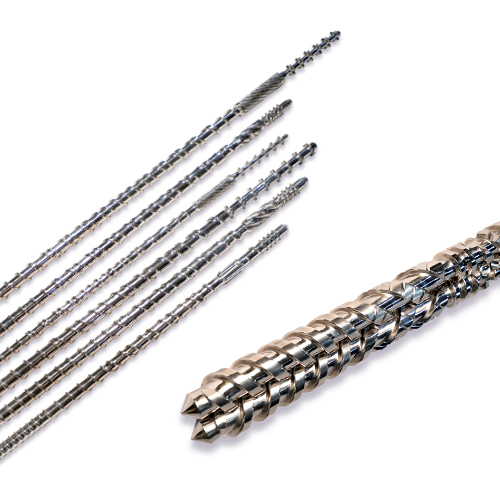
A customized screw is a precision-machined component manufactured to exact specifications defined by the customer application rather than produced to a fixed standard catalogue design. It is the rotating element inside an extruder barrel that simultaneously conveys, compresses, melts, mixes, and meters polymer material from the feed opening to the die head. While standard screws cover the processing requirements of common thermoplastic applications effectively, many industrial extrusion operations involve materials, machine configurations, throughput targets, or performance objectives that fall outside what any off-the-shelf product can reliably deliver. In these situations, a purpose-engineered component is the correct and often the only viable solution.
Customized Screw
Price of Customized Screw
|
Screw Minimum Size (mm or inch) |
Screw Maximum Size (mm or inch) |
Barrel Minimum Size (mm or inch) |
Barrel Maximum Size (mm or inch) |
Minimum Price (In Rs) |
Maximum Price (In Rs) |
|---|---|---|---|---|---|
|
20mm |
250mm |
20mm |
250mm |
Rs. 12,500 |
Rs. 12,50,000 |
The geometry of an extruder screw is the primary determinant of its processing performance. Every geometric parameter — from the outer diameter and length-to-diameter ratio to the flight depth, helix angle, pitch, compression ratio, and the design of any mixing or venting sections — directly governs how the material behaves as it travels through the extruder. This approach allows each of these parameters to be specified precisely for the polymer is being processed, the extruder being used, and the output quality and rate being targeted. The result is a screw that works with the material and machine rather than being a compromise solution designed for an average application.
At Hi-Tech Screw Barrel Works, the design and manufacture of customized screws is a core engineering capability developed and refined across three decades of polymer processing applications. Our engineering team engages directly with each customer to understand the specific application thoroughly before specifying a single dimension. The finished customized screw is not simply a component manufactured to a drawing but a precision engineering solution that reflects a deep understanding of how screw geometry drives extrusion performance. Every custom screw from our facility is manufactured using premium steel grades, processed through advanced CNC machining centres and dedicated surface treatment facilities, and inspected to comprehensive quality standards before dispatch.
Hi-Tech Screw Barrel Works is a leading manufacturer, exporter, and supplier of customized screws from Ahmedabad, Gujarat, India — serving plastic processors, rubber processors, compounders, machinery builders, and research institutions across India and internationally with precision-engineered custom screw solutions backed by ISO 9001:2015 certified manufacturing.
Technical Specifications — Customization Parameters
| Parameter / Feature | Customization Range or Options |
|---|---|
|
Screw Diameter |
15 mm to 300 mm — or as per customer drawing |
|
Overall Length |
As per L/D ratio and extruder model or customer drawing |
|
L/D Ratio |
10:1 to 40:1 — any ratio engineered to application |
|
Compression Ratio |
1.5:1 to 5.0:1 — calculated to polymer and process |
|
Flight Depth — Feed Zone |
Custom calculated to material bulk density and feed characteristics |
|
Flight Depth — Metering Zone |
Custom calculated to output rate and pressure requirements |
|
Helix Angle |
15° to 30° as per design requirements |
|
Flight Width |
Custom as per diameter and application |
|
Screw Type |
Single screw, twin screw (conical or parallel), vented, non-vented |
|
Base Material |
38CrMoAlA, 42CrMo, Stainless Steel, or as specified |
|
Surface Treatment |
Gas nitriding, ion nitriding, WC HVOF hardfacing, chrome plating |
|
Surface Hardness |
HRC 60–68 depending on treatment selected |
|
Nitriding Depth |
0.3 mm to 0.8 mm as specified |
|
Mixing Sections |
Maddock, barrier, blister ring, pin mixing elements — or none |
|
Venting Configuration |
Atmospheric vent, vacuum vent, or non-vented as required |
|
Drive End Geometry |
Keyway, spline, or coupling as per extruder and customer specification |
|
Nose Geometry |
As per extruder die head connection and customer specification |
|
Surface Finish |
Ra 0.4 to 1.6 µm as specified |
|
Documentation |
Approved drawing, material certificate, inspection report, hardness report |
|
Lead Time |
3 to 10 weeks depending on complexity and specifications |
Salient Features of Customized Screw
Polymer-Specific Screw Geometry Design
Every custom project begins with a thorough review of the target polymer — its rheological properties, thermal characteristics, and processing window. Melt flow behaviour, thermal sensitivity, crystallization or softening profile, filler loading, and any special processing requirements are all considered before the screw geometry is specified. The compression ratio, flight depth, helix angle, and the length and design of each functional zone are chosen specifically for the material in question rather than applied from a generic template.
Precision CNC Machining to Micron-Level Tolerances
All custom components are manufactured on advanced CNC turning centres and precision grinding machines to dimensional tolerances measured in micrometres. The flight outer diameter, root diameter, flight width, helix angle, and pitch are all machined to the exact values specified in the engineering drawing, ensuring correct interaction with the barrel bore and consistent processing performance throughout the screw length.
Premium Material Grade Selection
The base material is selected to match the specific combination of mechanical demands and processing environment of the application. For standard thermoplastic processing, 38CrMoAlA nitriding steel combines excellent machinability, superior nitriding response, and a tough ductile core. For demanding applications requiring greater base hardness, W6Mo5Cr4V2 high-speed steel provides a harder, more wear-resistant matrix. For chemically aggressive polymers including halogenated materials, fluoropolymers, and certain specialty compounds, stainless steel or nickel-alloy constructions are available.
Advanced Surface Hardening Matched to Application
The surface hardening treatment applied to every custom screw is selected to provide the wear and corrosion resistance profile demanded by the specific application. Gas nitriding or ion plasma nitriding achieving HRC 60–65 surface hardness at 0.4–0.6 mm depth is the standard treatment for most thermoplastic applications. For highly abrasive compound processing, tungsten carbide HVOF thermal spray hardfacing on screw flight tips delivers hardness values of HV 1200–1400, extending service life by two to three times. For corrosive processing environments, hard chrome plating or nickel-alloy cladding provides additional chemical protection.
Custom Mixing Section Design
One of the most impactful customization options is the incorporation of precision-engineered mixing sections at specific positions along the screw length. Maddock mixing elements provide intensive dispersive mixing for pigment dispersion and polymer blend compatibility. Barrier mixing sections improve distributive mixing and melt temperature uniformity. Blister rings and pin mixing elements serve different mixing objectives depending on the material and quality requirements. The type, position, and geometry of each mixing section are selected based on the specific homogenization requirements of the compound being processed.
Venting Section for Devolatilization
For materials that require devolatilization, a vented design incorporating a decompression zone and atmospheric or vacuum vent section can be engineered into the customized screw. The vent zone geometry — including the depth of the decompression channel and the length of the decompression section — is calculated to ensure effective devolatilization without vent flooding across the full operating throughput range of the application.
Reverse Engineered from Sample or Customer Drawing
Custom screws are manufactured either to customer-supplied engineering drawings or to drawings prepared by our engineering team from reverse-engineered worn or damaged original samples. For reverse engineering, precision CMM measurement and dimensional analysis of the original sample are used to reconstruct the complete nominal geometry. A manufacturing drawing is prepared and submitted to the customer for approval before production begins, ensuring complete dimensional accuracy of the finished replacement screw.
Tungsten Carbide Flight Tip Hardfacing
For applications involving abrasive compound processing, tungsten carbide HVOF hardfacing is available as a standard upgrade option on flight tips. This coating creates a dense, strongly-bonded wear surface with hardness typically in the range of HV 1200–1400 — significantly harder than the HRC 60–65 achievable by nitriding alone — and resists abrasive wear from mineral fillers, glass fibres, wood flour, and other hard abrasive particles far more effectively than a standard nitrided surface.
Applications
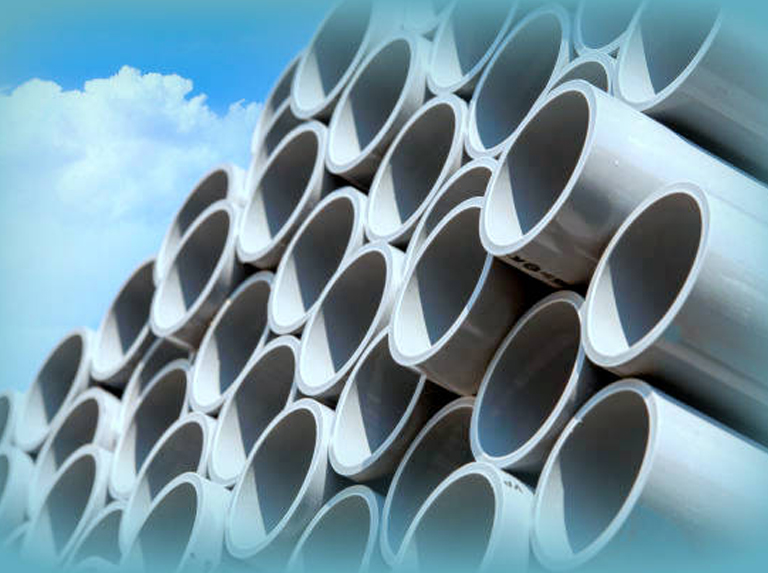


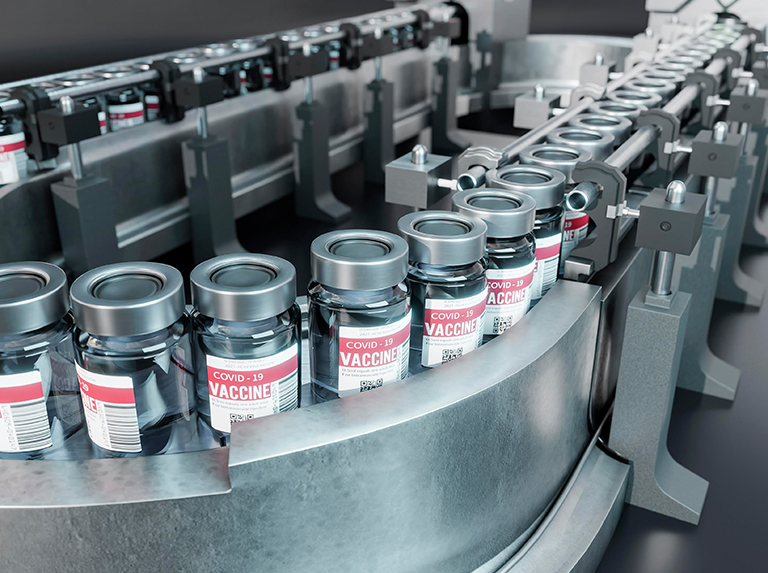

Working Mechanism — How Customization Improves Screw Performance
Feed Zone Design for the Material
The feed zone geometry is designed to match the bulk density and feed characteristics of the specific material being processed. For free-flowing pellets a standard deep-flighted feed zone works effectively. For powders, flakes, regrind, or low-bulk-density materials, a modified feed zone with greater flight depth ensures consistent material intake and prevents the output rate instability caused by starve-feeding. The length of the feed zone is also optimised to ensure sufficient compression is generated before the material enters the transition zone.
Compression Zone Matched to Melting Behaviour
The compression ratio and the length and profile of the compression zone are matched to the specific melting behaviour of the target polymer. Fast-melting crystalline polymers such as polyethylene and polypropylene require a shorter, more abrupt compression zone that generates melting energy quickly. Amorphous polymers such as PVC and polystyrene require a longer, more gradual compression that distributes the mechanical energy input more gently. Highly filled compounds require compression ratios calculated to account for the filler content and its effect on the bulk-to-melt volume change.
Mixing Section Engineering for Homogeneity
The type and positioning of mixing sections are determined by the specific homogenization requirements of the compound being processed. For colour master batch production, a Maddock dispersive mixing element at the downstream end of the metering zone provides intensive mechanical shearing of pigment agglomerates to achieve high colour dispersion quality. For polymer blends and alloys, a barrier mixing element in the transition zone provides distributive mixing that reduces melt temperature variation and improves blend uniformity.
Venting Zone for Devolatilization
For materials that require devolatilization, a vented screw design incorporates a decompression zone between the first and second metering sections where the screw channel depth increases substantially, causing the melt pressure to fall to near-atmospheric. A vent port in the barrel at this position allows the released volatiles to escape. The depth and length of the decompression zone are calculated specifically for the devolatilization requirement and the throughput range of the application to prevent vent flooding while ensuring complete removal of the target volatile component.
Why Choose Hi-Tech Screw Barrel Works
Deep Application Engineering Knowledge
Our facility has been designing and manufacturing screws for polymer processing applications for over three decades. This depth of experience means our engineering team can move efficiently from a customer application description to fully specified screw geometry without the extended trial-and-error process that a less experienced manufacturer would require. We understand how screw geometry variables affect processing performance across a broad range of polymers and processing conditions, and we apply that understanding to every customized screw project we undertake.
Fully In-House CNC Manufacturing
Every custom screw is manufactured entirely in-house at our Ahmedabad facility using advanced CNC turning centres, cylindrical grinding machines, and dedicated nitriding furnaces, without outsourcing any critical manufacturing process to a third party. This complete in-house capability gives us full control over dimensional accuracy, surface quality, heat treatment consistency, and delivery schedule, with a single point of accountability for the customer from order confirmation to final dispatch.
Reverse Engineering Capability
We offer a comprehensive reverse engineering service for customers who need to reproduce a worn or damaged screw from an obsolete or non-standard extruder for which original manufacturer spares are no longer available. Our engineering team uses precision CMM measurement and detailed dimensional analysis to reconstruct the complete original geometry of any screw sample regardless of its condition, and prepares a complete manufacturing drawing for customer approval before production begins. This service has restored production capability to many customers who had screws that could not be sourced through any other channel.
ISO 9001:2015 Certified Quality Management
Every screw is manufactured and inspected under our ISO 9001:2015 certified quality management system, ensuring that all critical dimensions, surface treatments, and material specifications are verified at every stage of production. The complete documentation package supplied with every custom component gives customers the quality assurance and traceability they need for incoming inspection records and ongoing maintenance planning.
FAQs
What screw geometry parameters can be customized for a specific polymer application?
Almost every geometric parameter of an extruder screw can be customized to specific requirements. The primary parameters that define screw geometry and processing performance are the screw diameter — fixed by the extruder model — the length-to-diameter ratio governing the total processing length, the compression ratio determining the volumetric reduction from feed zone to metering zone, the flight depth in both the feed and metering zones controlling drag flow capacity and pressure generation, the helix angle and pitch affecting conveying efficiency and residence time distribution, the length and geometry of the compression zone determining how rapidly the material is compressed, the type and position of any mixing sections such as Maddock elements, barrier flights, or pin mixers, and the design of any venting section for devolatilization. Beyond geometry, the base material grade, surface treatment type and depth, drive end geometry, and nose geometry are all additional parameters that can be precisely specified. Our engineering team at Hi-Tech Screw Barrel Works consults with each customer on all of these parameters to ensure the finished customized screw is fully optimised for the specific polymer, machine, and processing objectives.
How does Hi-Tech Screw Barrel Works determine the correct screw geometry for a new application?
The process of determining the correct screw geometry for a new application begins with a detailed application review. Our engineering team gathers information about the polymer being processed — including its melt flow characteristics, thermal processing window, crystallinity or amorphous nature, filler loading, and any special additives. Information about the extruder is collected including the model, screw diameter, barrel length, available drive power, and speed range. The target processing conditions including the desired output rate, melt temperature, and melt pressure at the die are established. Any specific performance objectives or problems with a previous screw that the new design needs to address are documented. Based on this complete application picture, our team performs a screw geometry calculation that starts from the polymer rheology and the extruder drive capability and works through each functional zone to arrive at an optimised geometry specification. This specification is documented in a complete engineering drawing and submitted to the customer for review and approval before production commences. The drawing approval step is non-negotiable at Hi-Tech Screw Barrel Works as it ensures that the customer and our engineering team have a shared and documented understanding of exactly what is being manufactured.
Can Hi-Tech Screw Barrel Works reproduce a screw from a worn or damaged original sample?
Yes. Reproducing screws from worn or damaged original samples is one of our most commonly requested services and our engineering team has extensive experience in this reverse engineering work. The process begins with a detailed dimensional measurement of the original sample using precision calibrated instruments. All accessible dimensions are measured including the screw outer diameter at multiple points along the length, the root diameter at multiple points, the flight width and helix angle, the pitch, and the drive end and nose geometry. Where wear has reduced the flight tip diameter below the original value, our team applies knowledge of standard screw geometry conventions and manufacturing tolerances to reconstruct the original nominal outer diameter. Where significant material has been lost from the flight flanks or root, additional analysis is performed to estimate the original flight depth and compression ratio. The reconstructed nominal geometry is documented in a complete engineering drawing which is submitted to the customer for review. Customers are strongly encouraged to provide any available original documentation such as the extruder manual or previous manufacturing drawings as this significantly improves the accuracy of the dimensional reconstruction. Once the drawing is approved by the customer, production proceeds and the finished screw is inspected against all drawing dimensions before dispatch.
What surface treatments are available for customized screws and how are they selected?
A comprehensive range of surface treatments is available for custom screws, with the selection based on the wear and corrosion demands of the application. The standard and most widely used surface treatment is gas nitriding or ion plasma nitriding, which diffuses nitrogen into the steel surface to form a hard compound layer and diffusion zone with surface hardness of HRC 60–65 at a depth of 0.4–0.6 mm. This treatment is suitable for the majority of thermoplastic processing applications. For highly abrasive applications where the compound contains mineral fillers, glass fibre, wood flour, or other hard particles, tungsten carbide HVOF thermal spray hardfacing is applied to the screw flight tips, achieving hardness values of HV 1200–1400 and dramatically extending service life. Hard chrome plating is available for applications requiring a smooth corrosion-resistant surface with moderate wear resistance. For chemically aggressive polymers such as fluoropolymers or certain specialty compounds, nickel-alloy cladding or stainless steel or nickel-alloy base material provides the required chemical resistance. Surface treatment selection is part of the technical consultation process, with our engineering team advising on the optimal treatment for each application.
What is the lead time for a customized screw from Hi-Tech Screw Barrel Works?
Lead times for customized screws depend on the complexity of the component, the current production schedule, and the availability of the specified raw material grade. For straightforward customizations involving non-standard dimensions or material grades, a lead time of 6 to 8 weeks from drawing approval is typical. For more complex customizations involving significant screw geometry modification, specialized mixing sections, venting provisions, or unusual material grades, a lead time of 5 to 8 weeks from drawing approval is more representative. For the most demanding projects involving very large screw diameters, novel surface treatment specifications, or multiple simultaneous customization parameters, lead times of 8 to 12 weeks may be required. A specific lead time commitment is made for every project at the time of order confirmation and is tracked through our production scheduling system to ensure on-time delivery. Customers with urgent requirements are encouraged to raise the timeline at the enquiry stage so that our team can assess feasibility and, where possible, prioritise the project in the production schedule.
What is the difference between a customized screw and a standard replacement screw?
A standard replacement screw is manufactured to replicate an existing design as closely as possible, matching the original dimensions and material specification with the goal of restoring the extruder to its previous performance level. A customized screw involves deliberate modification of one or more design parameters relative to the original or standard specification with the intention of improving performance, addressing specific processing problems, or adapting the component to changed processing requirements. Both types of replacement screws are supplied at our facility. Standard replacement screws are produced by reverse engineering the original component or working from the original drawing with exact dimensional replication as the primary objective. Customized screws involve the application of our engineering team’s knowledge to deliberately change specific aspects of the design for a defined performance benefit. In practice, many replacement screw projects involve elements of both approaches — where the customer wants the replacement to be largely faithful to the original but with specific improvements incorporated to address known weaknesses or to accommodate a change in the material being processed.
Can venting be incorporated into a customized screw for moisture removal or devolatilization?
Yes. Vented screw designs incorporating a decompression zone and one or more vent sections are available as a customization option. Venting is required in extrusion applications where the polymer contains moisture, residual polymerization monomers, processing solvents, or absorbed atmospheric gases that would cause visible defects such as surface bubbles, voids, splay marks, or streaks in the extrudate if allowed to remain in the melt through to the die. The vented screw geometry incorporates an initial metering zone to build melt pressure and ensure complete plasticization, followed by a decompression zone where the screw channel depth increases substantially, causing the melt pressure to drop to near-atmospheric. A vent port in the barrel at this position allows the released volatiles to escape. A second compression zone and metering section downstream of the vent port re-pressurizes and remixes the devolatilized melt before it enters the die. The depth and length of the decompression zone are calculated based on the required decompression ratio and the throughput range of the application to ensure effective devolatilization without vent flooding under any operating condition. Both single-vent and multi-vent screw designs are available depending on the devolatilization requirement.
How does Hi-Tech Screw Barrel Works handle intellectual property and confidentiality for custom screw projects?
Confidentiality of customer-specific technical information is treated as an absolute requirement at our facility. All engineering drawings, specifications, proprietary screw geometry data, application information, and customer identity shared during a custom screw project are held in strict confidence and are not disclosed to any third party under any circumstances without the explicit written consent of the customer. Non-disclosure agreements are routinely signed at the customer’s request before any exchange of technical information. Our manufacturing operations are conducted entirely within our own production facility in Ahmedabad with no outsourcing of machining, heat treatment, or other critical operations to third parties, ensuring that customer-specific design information remains entirely within our controlled production environment. This confidentiality commitment applies equally to OEM customers who supply their own designs for contract manufacture and to customers for whom our engineering team develops the screw geometry as part of the project. Customer drawings and specifications are stored securely and accessed only by the personnel directly involved in the specific project.
What quality checks are performed on a customized screw before dispatch?
Quality assurance for custom screws is a multi-stage in-process programme that begins with incoming raw material verification and extends through every manufacturing stage to final inspection before dispatch. Incoming raw material is checked against the specified material grade with chemical composition and hardness verified against the material test certificate before any machining commences. During CNC rough turning and precision finish machining, all critical dimensions are checked at multiple stages using calibrated measurement instruments including precision micrometers, CMM equipment, and calibrated thread gauges. After heat treatment, the surface hardness is verified using a calibrated Rockwell hardness tester at multiple points along the screw length, and the nitriding depth is confirmed by metallographic examination of test coupons processed in the same batch. Final inspection includes full dimensional verification of all critical parameters against the approved engineering drawing — including screw outer diameter at multiple points along the length, root diameter, flight width, helix angle, pitch, and all drive end and nose geometry dimensions. Surface roughness is measured using a calibrated profilometer to verify the specified finish. The complete dimensional inspection results are recorded in the inspection certificate that accompanies the screw on dispatch, together with the material test certificate and surface treatment record.
Can Hi-Tech Screw Barrel Works supply customized screws for twin-screw extruders?
Yes. We manufacture custom screws for both single-screw and twin-screw extruder configurations including parallel co-rotating twin screws, parallel counter-rotating twin screws, and conical counter-rotating twin screws. For twin-screw extruders, the customization extends to all parameters of the screw geometry including the inter-screw centreline distance, the helix direction and timing relationship between the two screws, the clearance specification between the screws and between each screw and the barrel bore, and the design of any intermeshing mixing sections. For conical twin-screw configurations, the taper angle and the feed-end and discharge-end screw diameters are additional customization parameters. Customized twin-screw assemblies are always supplied as matched pairs with both screws manufactured simultaneously from the same batch of material, processed through the same heat treatment cycle, and inspected together to verify correct inter-meshing clearances before dispatch. Supplying matched pairs manufactured under identical conditions ensures that the clearance balance between the two screws remains consistent throughout their service life.
What is tungsten carbide hardfacing and in which applications is it recommended for customized screws?
Tungsten carbide hardfacing is an advanced wear enhancement coating applied to the flight tips of an extruder screw using the HVOF high-velocity oxy-fuel thermal spray process. In this process, a tungsten carbide powder — typically of WC-Co or WC-CoCr composition — is accelerated to very high velocities in a combustion jet and impacted onto the screw flight tip surface, forming a dense, strongly adherent coating with hardness values in the range of HV 1200–1400. This hardness level is substantially higher than the HRC 60–65 achievable by nitriding alone and provides dramatically superior resistance to abrasive wear from hard particles carried in the polymer melt. Tungsten carbide hardfacing is recommended for customized screws in applications where the compound contains calcium carbonate above 20 phr, glass fibre or carbon fibre reinforcement, wood flour or rice husk in WPC formulations, mineral-reinforced engineering compounds, and any application where previous screw sets have shown flight tip abrasion as the primary failure mode. It is also strongly recommended for screws processing recycled polymers where variable and potentially elevated mineral filler content creates unpredictable abrasion demands. The investment typically delivers two to three times or more the service life compared to a standard nitrided screw in these abrasive applications, making it highly cost-effective when all replacement and downtime costs are included in the analysis.
How should a customized screw be commissioned and run in after installation?
Correct commissioning and run-in of a new customized screw is important both for protecting the new component and for establishing the baseline performance data against which future monitoring measurements will be compared. Before commissioning, verify that all extruder components — including the barrel, heater bands, thermocouples, and cooling circuits — are correctly installed and that the barrel has been warmed up to the target processing temperature using a gradual step-by-step warm-up protocol before introducing material. For the initial run-in period, operate at a reduced screw speed of approximately 60 to 70 percent of normal operating speed for the first two to three hours of production. This allows the screw flight tips and barrel bore surface to establish their operating clearance gradually without the mechanical stress and heat that would be generated at full speed on a new screw. During the initial run-in period, monitor motor current draw, output rate, melt temperature, and melt pressure and compare against the expected values for the customized screw design. After the initial run-in period, record all key process parameters at standard operating conditions as baseline values. Conduct a dimensional measurement of the screw outer diameter at multiple points to establish the as-installed baseline wear monitoring data. Our technical team is available to provide application-specific commissioning guidance for every custom screw we supply.
What maintenance practices are recommended to maximise the service life of a customized screw?
The service life of a customized screw depends not only on the quality of the component itself but significantly on the maintenance practices adopted by the operator. The most important single maintenance practice is the prevention of cold-starting. Operating the extruder with a solidified polymer charge remaining in the barrel from the previous production run imposes extreme mechanical stress on the screw flight tips and is the most common cause of premature flight tip damage and scoring. Always warm up the extruder fully before applying torque to the screw. At the end of every production run or before every planned shutdown, purge the extruder thoroughly with a compatible purging compound or a natural polymer at processing temperature to remove all residual material from the screw channels and barrel bore. This prevents the carbonisation and corrosive by-product formation that occurs when process polymer — particularly PVC — is left in the barrel during shutdown. Conduct regular dimensional inspections of the screw outer diameter at multiple points along the length at quarterly intervals for typical applications, and more frequently for abrasive applications. Record all measurements in a maintenance log and compare against baseline to track wear rate and plan refurbishment or replacement at the optimal time. Our technical team is available to advise on recommended inspection intervals and maintenance procedures for each specific customized screw application.
Can a worn customized screw be refurbished by Hi-Tech Screw Barrel Works?
Yes. Hi-Tech Screw Barrel Works provides comprehensive refurbishment services for worn custom screws that can significantly extend the useful operational life of the component at a fraction of the cost of full replacement. The refurbishment process begins with a detailed dimensional assessment measuring the screw outer diameter at multiple points along the length and comparing against the original drawing dimensions to determine the extent and distribution of wear. Based on this assessment, the appropriate refurbishment route is selected. For screws with moderate flight tip wear, tungsten carbide HVOF thermal spray is applied to the worn flight tips to build up the diameter, followed by precision cylindrical grinding back to the original outer diameter tolerance. For screws with more extensive wear or flight damage, a combination of repair welding followed by HVOF coating and re-grinding may be required. Following dimensional restoration, re-nitriding of the screw surface restores the full hardness depth where it has been consumed by wear or removed during grinding. The refurbished screw then undergoes the same comprehensive dimensional inspection as a new component before dispatch. Properly executed refurbishment typically restores a worn customized screw to 90 to 95 percent of its original dimensional specification at approximately 40 to 60 percent of the cost of a new replacement — providing significant savings particularly for larger or more complex screw designs.
How does the compression ratio of a customized screw affect processing performance?
The compression ratio of an extruder screw — defined as the ratio of the flight channel volume in the feed zone to the flight channel volume in the metering zone — is one of the most fundamental parameters governing processing performance and is one of the most important customization variables in screw design. A higher compression ratio produces more intense mechanical compression of the material as it passes from feed to metering zone, generating more frictional heat and creating higher melt pressure. This is advantageous for processing crystalline polymers with a sharply defined melting point that require significant energy input to achieve complete melting within the available screw length. However, an excessively high compression ratio for a given polymer can generate too much shear heat, leading to thermal degradation particularly in heat-sensitive materials such as rigid PVC or certain thermoplastic elastomers. A lower compression ratio produces gentler, more gradual compression with less frictional heat generation, suitable for heat-sensitive polymers with a broad softening range and for materials that are already partially warmed by the barrel heaters before encountering significant mechanical compression. For highly filled compounds, the compression ratio must be calculated to account for the difference between the bulk density of the filled compound in the feed zone and the density of the fully compacted melt in the metering zone. At Hi-Tech Screw Barrel Works, the compression ratio of every customized screw is calculated specifically for the target polymer and processing conditions rather than assigned from a generic table.
What is the importance of the L/D ratio in a customized screw design?
The length-to-diameter ratio of an extruder screw is one of the most consequential design parameters and its customization directly affects the processing capability, output rate, melt quality, and energy efficiency of the extruder. A higher L/D ratio such as 30:1 or 36:1 provides a longer total processing length, which translates into longer residence time in the barrel and therefore more opportunity for thermal conduction from the barrel heaters, melting, homogenization of the polymer, and mixing of additives and fillers. Higher L/D ratios are advantageous for processing difficult polymers such as engineering resins with high melting points or complex compound formulations that require extended processing length to achieve complete homogenization. They are also beneficial when devolatilization is required, as the longer screw can accommodate both a first metering zone, a decompression and vent section, and a second compression and metering zone within the available barrel length. The limitation of a higher L/D ratio is the greater cost of the longer screw, the higher torque required from the drive system, and in some cases increased risk of mechanical deflection of the screw shaft. For standard PVC pipe and profile applications, L/D ratios of 18:1 to 22:1 are the established norm. For engineering polymer compounding, L/D ratios of 28:1 to 36:1 are common. For highly demanding devolatilizing or reactive extrusion applications, L/D ratios above 36:1 may be required. Hi-Tech Screw Barrel Works engineers custom screws across the full range of L/D ratios, matching the processing length to the specific requirements of the application.
What are the most common reasons customers request a customized screw from Hi-Tech Screw Barrel Works?
Customers approach our facility for customized screws for a number of recurring reasons. The most common is the unavailability of a standard replacement screw for an obsolete, non-standard, or imported extruder model for which the original manufacturer no longer supplies spare components. The second most common reason is the need to improve processing performance beyond what the existing or standard screw delivers — whether in terms of higher output rate, better melt quality, reduced specific energy consumption, improved surface quality on the extrudate, or better mixing of additives in a compound formulation. The third common reason is a change in the material being processed on an existing extruder where the original screw was optimised for a different polymer and produces suboptimal results such as degradation, excessive melt temperature, poor surface finish, or inadequate output rate with the new material. A fourth common reason is the processing of particularly demanding materials such as highly filled compounds, recycled polymers, specialty engineering resins, or rubber and elastomer compounds that require purpose-built screw designs no standard catalogue product can adequately serve. A fifth growing reason is the need for customized screws as original equipment components for new extruder builds by machinery manufacturers who require screw designs optimised for the performance claims of their new machine model.
How does material selection for a customized screw affect performance and service life?
The base material selected for a custom screw has a fundamental influence on both processing performance and service life under the specific wear and corrosion conditions of the application. For standard thermoplastic processing applications, 38CrMoAlA chromium-molybdenum-aluminium nitriding steel is the most widely used base material, combining excellent machinability that allows precise CNC machining of the complex screw geometry, superior nitriding response that achieves HRC 60–65 surface hardness after gas or ion nitriding, and a tough ductile core that resists fracture under cyclic mechanical stresses. For higher-performance applications where greater base hardness is required to resist abrasion from heavily filled or reinforced compounds, W6Mo5Cr4V2 M2-grade high-speed steel is used. This material has a higher base carbon content and a more complex carbide microstructure that provides greater inherent hardness and abrasion resistance compared to 38CrMoAlA, even before surface hardening treatment. For processing fluoropolymers, chlorinated polymers, and other chemically aggressive materials, stainless steel or nickel-alloy base materials are selected for their superior resistance to chemical attack. All base materials used in manufacture at Hi-Tech Screw Barrel Works are verified against material test certificates and independently tested for chemical composition and hardness before entering production, ensuring that the specified grade is confirmed and documented before machining begins.
How are customized screws packaged and protected for delivery by Hi-Tech Screw Barrel Works?
Hi-Tech Screw Barrel Works applies purpose-designed protective packaging to all custom screw shipments to ensure that precision-machined and surface-treated components arrive at the customer facility in perfect condition regardless of the shipping distance or transit duration. After final inspection, each screw is coated on all machined surfaces with a high-quality rust-preventive oil. The screw is then individually wrapped in VCI poly film — Vapour Corrosion Inhibitor film that actively prevents oxidation during storage and transit by releasing a vapour-phase corrosion inhibitor that adsorbs onto the metal surfaces and prevents atmospheric corrosion. The wrapped screw is placed in a purpose-built wooden crate or heavy-duty cardboard packaging with foam or rubber support cradles precisely shaped to hold the screw securely and prevent any movement, rotation, or surface contact during handling and transport. For twin-screw assemblies, both screws are packed together in the same crate with clear labelling identifying the left-hand and right-hand screws to prevent installation errors. For international export shipments, all wooden packaging materials are heat-treated in accordance with ISPM-15 phytosanitary standards. Each shipment is accompanied by the complete quality documentation package.
Why should polymer processors choose Hi-Tech Screw Barrel Works as their partner for customized screws?
Polymer processors choose Hi-Tech Screw Barrel Works as their partner for customized screws because our combination of deep application engineering knowledge, fully in-house manufacturing capability, and rigorous quality management delivers precision-engineered components that perform exactly as designed, maintain their dimensional accuracy over a long service life, and are supported by a technical team that remains engaged with the customer throughout the component lifecycle. Our three decades of experience across thermoplastic, elastomer, rubber, pharmaceutical, food, and specialty polymer processing applications means that our engineering team brings genuine application knowledge to every custom screw project — not just manufacturing capability. Our fully in-house manufacturing operation — from raw material receipt through CNC machining, heat treatment, and final inspection, with no outsourcing of any critical process — means we have complete visibility and control over every aspect of quality and schedule. Our ISO 9001:2015 certified quality system ensures this quality is documented, verified, and consistently reproduced across every production order. Our after-sales technical support programme means that when a customer installs a customized screw from Hi-Tech Screw Barrel Works, they gain a knowledgeable partner who can help them optimise their processing parameters, monitor wear, plan maintenance, and advise on refurbishment or replacement at the right time to maximise both screw performance and operational economics.
WHY CHOOSE US
Your Trusted Partner in Success
At Hi-Tech Screw Barrel Works, we are dedicated to providing top-tier services with a personal touch. With over 20+ years of experience and a proven track record of success, we prioritize your needs, ensuring customized solutions that drive results. Our team of experts stays ahead of industry trends, delivering innovative strategies tailored specifically for your business.
Unmatched Expertise
Experts in screw barrel manufacturing for 20+ years
State-of-the-Art Manufacturing
Precision screw barrels, high-tech manufacturing
Customer-Centric Approach
Personalized solutions with top-notch customer support
















Expertise and Experience
With over 22 years of industry experience, we are leaders in the manufacturing of single screws, backed by a team of skilled professionals.

Advanced Manufacturing Facilities
Our state-of-the-art production facility is equipped with cutting-edge technology and CNC machines, ensuring precision and consistency in every component we manufacture.

Commitment to Quality
We adhere to stringent quality control standards throughout the manufacturing process, ensuring that each single screw meets our high-quality standards and exceeds customer expectations.

Customer-Centric Approach
We prioritize customer satisfaction and strive to provide personalized solutions and exceptional service. Our dedicated team is ready to assist you with technical expertise and support.